
Photo by Gary Pinkerton
A Letter from Benji Armistead
Dear Reader,
I am in trouble here.
When friend, meadow mentor, and visionary Terry Cook first asked me to write this update, I thought I had successfully dodged the assignment.
My argument was simple: I have zero credentials in ecology, restoration, or anything remotely relevant, and my only connection to Clare’s Meadow is that I happen to share a last (and middle) name with its honoree.
(Truth be told, my wife Tara deserves credit for first imagining what this meadow could become.)
Then I ran into Jenny. She looked at me and said, “I look forward to your letter.”
You don’t say no to Jenny.
What I do have is this: I walk Clare’s Meadow nearly every morning with the world’s best dog, Flora, and I am continually amazed by what it is becoming.
My route starts at the Gaucho Trailhead near the steeplechase, winds along the creek and cross-country course, crosses the bridge, and eventually arrives at the meadow. About two miles in total. I originally told myself I was doing it for the dog.
I discovered I was doing it for me.
If you haven’t met Terry Cook, you should. He leads meadow restoration efforts at Warner Parks and brings a rare combination of knowledge, humility, and determination to the work. Clare’s Meadow is thriving because of a remarkable partnership among Friends of Warner Parks staff, volunteers, donors, and supporters who believed this restoration was worth pursuing.
And what a transformation it has been.
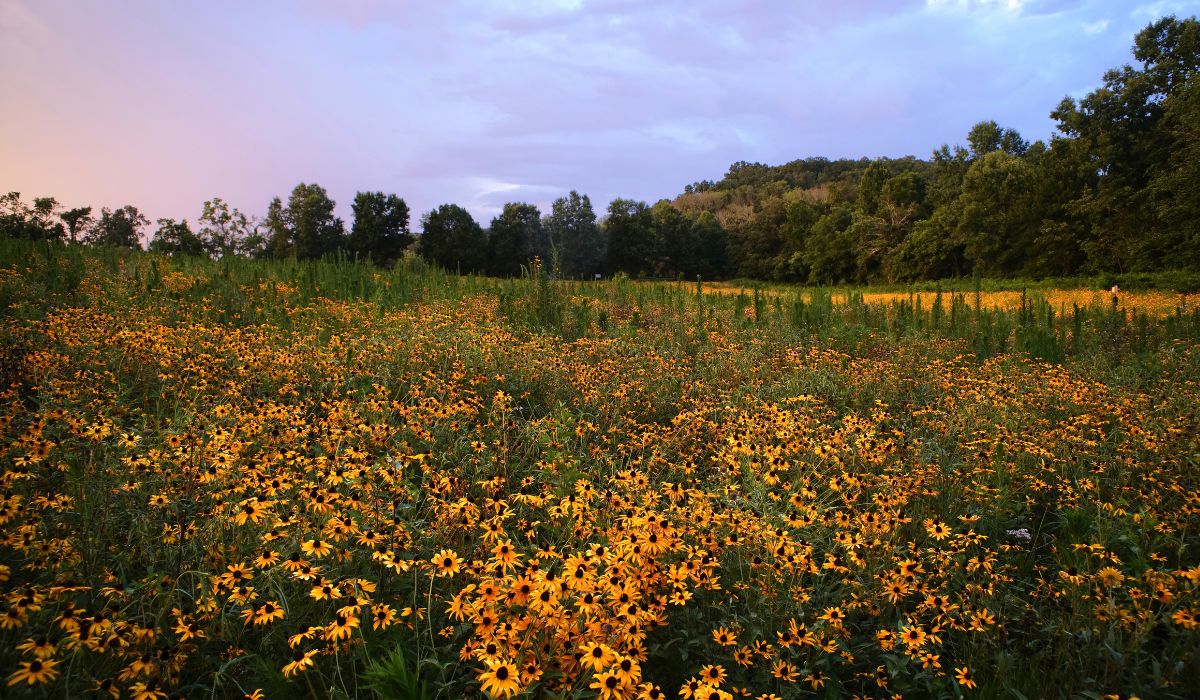
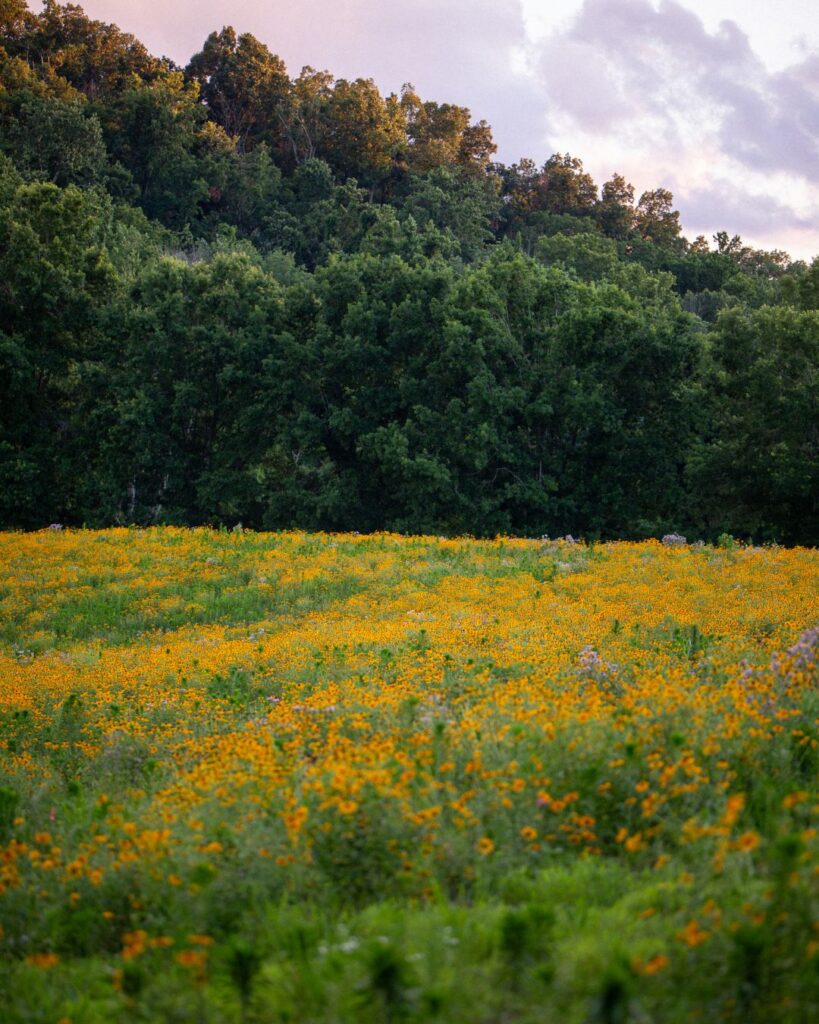
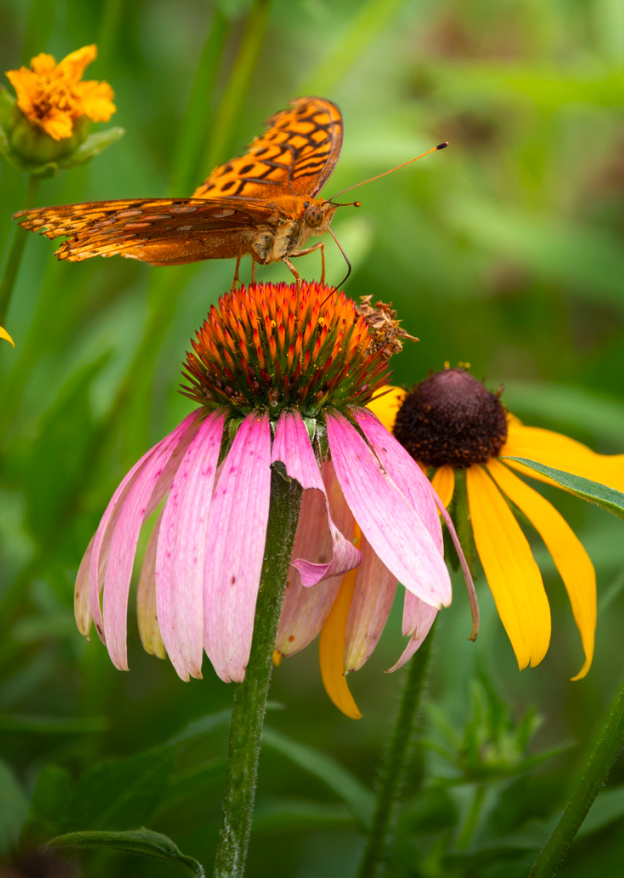
Terry warned me this would be the meadow’s “ugly year.” He is usually right about environmental matters, but I think he missed this one. The coreopsis that painted the field yellow earlier in the season has given way to a sea of black-eyed Susans. Bee balm is flourishing. Goldfinches dart across the field. Pollinators seem to be everywhere. The meadow hums with life.
If this is the ugly year, I cannot wait to see what comes next.
People stop their bikes, cars, runs, and walks every day to admire the meadow. They take photographs. They linger. Phones disappear into pockets. Earbuds come out. Terry calls it “Slow Ecology”—the practice of slowing down enough to watch, listen, and notice. Whatever you call it, something special happens when you spend time there.
The meadow is also teaching us. Through seasonal photography, wildlife monitoring, bird surveys, and bat studies, Friends of Warner Parks is documenting how native habitat restoration can bring life back to the landscape. Clare’s Meadow is helping inform restoration efforts in other park meadows as well, creating momentum for a broader vision of connected grassland habitats across Warner Parks.
And then there are the birds.
With the Merlin app in hand (Cornell University’s ornithological answer to Shazam), I’ve identified as many as 23 species in a single morning. Indigo Buntings, Eastern Bluebirds, Field Sparrows, Baltimore Orioles, Blue-gray Gnatcatchers, and many more. Across the road, a field that is still mowed annually hosts noticeably fewer birds and less diversity.
As these meadow restorations mature, there is real hope that species such as Northern Bobwhite and Eastern Meadowlark may once again find suitable habitat here.
The meadow’s influence extends beyond birds. Bat monitoring is already documenting species using the area at night, drawn by the abundance of insects emerging from the new habitat. Bluebird boxes installed nearby have already produced successful broods. Life is returning in ways both expected and surprising.
Perhaps most importantly, Clare’s Meadow demonstrates what is possible when a community comes together around a shared vision. Every donor, volunteer, advocate, and visitor has played a role in helping transform this landscape from a former golf course into a thriving native meadow.
Mom, Clare Armistead, believed deeply in Warner Parks and in caring for these places for future generations. I think she would be delighted to see people gathering here, learning here, and finding joy here.
So Terry has one request: come see it for yourself.
Walk it. Listen to it. Share it with a friend.
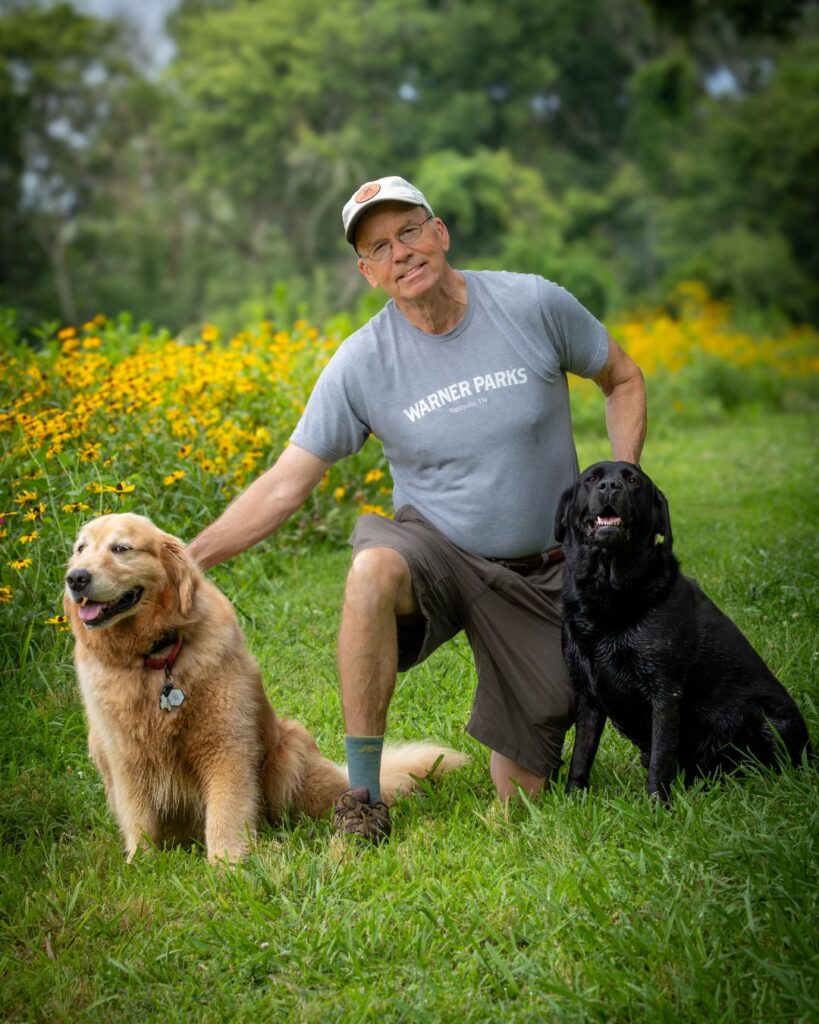
And if you’re there between 7 and 8 most mornings and happen to spot an older fellow in a cap walking a black lab named Flora—sometimes accompanied by Waylon, who appears to be part Golden Retriever and part elephant—please say hello.
You’ll find me happily lost in it all.
Come see Clare’s Meadow. I don’t think you’ll be disappointed.
– Benji Armistead
Learn More About Clare’s Meadow
What began as an overgrown field has been transformed into one of Warner Parks’ newest native grassland habitats.
Clare’s Meadow was created to restore an ecosystem that has become increasingly rare across Tennessee. Native meadows provide critical habitat for birds, butterflies, bees, and other pollinators while supporting healthier soils and more resilient landscapes.
The project is part of Friends of Warner Parks’ long-term commitment to restore native habitats throughout the parks and create more opportunities for visitors to experience the incredible biodiversity of Warner Parks.
Want to learn more? Read the full story behind Clare’s Meadow, including how it was restored, the species it supports, and why native grasslands are so important to Tennessee’s wildlife.
How to Get There
Clare’s Meadow is located in Percy Warner Park, near the intersection of the Mossy Ridge Trail (blazed red) and the Cane Connector Trail (blazed red and white). The meadow is easily accessible by foot and is especially beautiful from late spring through fall as native grasses and wildflowers come into bloom.
To get there, you have a few options.
Option 1: Fastest approach by foot
- Park at the Vaughn’s Creek Trailhead on Highway 100
- Take the Cane Connector trail (blazed red and white) to the paved road near Sycamore Grove Shelter
- Turn left on the paved road— the meadow will be up on your right side
Option 2: Access the Meadow via car
- Turn onto Gaucho Road from Old Hickory Blvd
- Follow the road past the Steeplechase Grandstand
- Turn left at the fork in the road
- Continue driving past Talley Bluff
- Follow the road toward Sycamore Grove Shelter — the meadow will appear on your left
Option 3: Drop down from the Mossy Ridge Trail
- Turn onto the Cane Connector Trail (blazed red and white) from the Mossy Ridge Trail (blazed red)
- You will see Clare’s meadow at the intersection of the Cane Connector Trail and the paved road
How to Support this Project
There are several other identified areas prime for grassland restoration and are in-progress at the Burch Reserve and in Edwin Warner Park. To support this project, consider becoming a monthly sustaining member of Warner Parks, making a tribute gift, or donating to Friends of Warner Parks.