
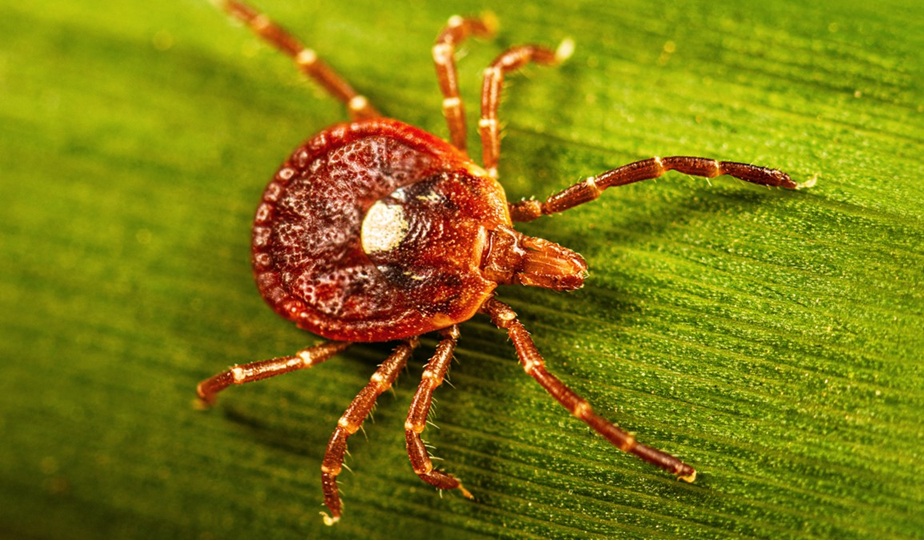
Header photo sourced from the Centers of Disease Control website.
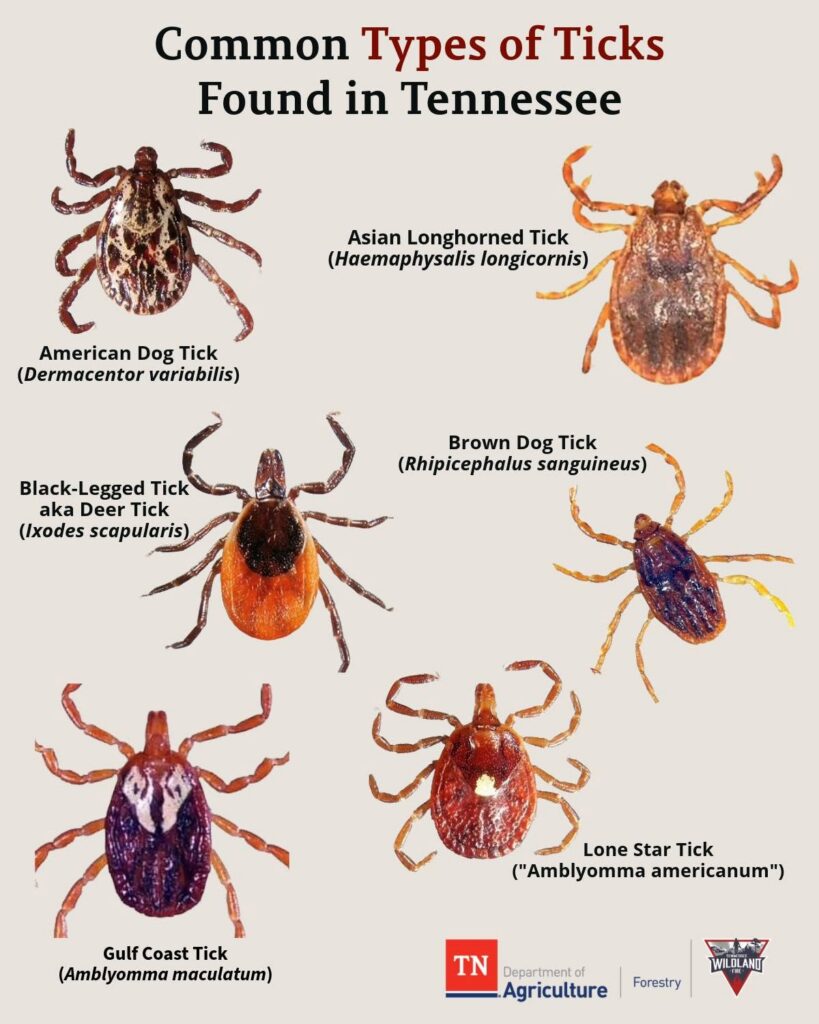
As you spend time outdoors this summer, it’s important to practice tick prevention as tick-borne diseases continue to be a growing concern in Tennessee. Ticks are commonly found in wooded, brushy areas and can also be found in grassy fields or yards. Learn more below about the six types of tick species that live in Tennessee and how you should respond if you get bit.
Tick Species Found in Tennessee
- American Dog Tick (Wood Tick) (Dermacentor variabilis)
Distributed: East of the Rocky Mountains and parts of the Pacific Coast
Transmits: Tularemia and Rocky Mountain spotted fever
Notes: Highest risk in spring and summer
- Asian Longhorned Tick (Haemaphysalis longicornis)
Distributed: Eastern U.S.; recently found in eastern Tennessee
Transmits: No known human diseases in the U.S.
Notes: Invasive species that can reproduce quickly and cause infestations
- Black-Legged Tick (Deer Tick) (Ixodes scapularis)
Distributed: Eastern U.S.
Transmits: Lyme disease, anaplasmosis, babesiosis, Powassan virus.
Notes: May bite any time temperatures are above freezing.
- Brown Dog Tick(Rhipicephalus sanguineus)
Distributed: Worldwide
Transmits: Rocky Mountain spotted fever
Notes: Primarily bites dogs but can bite humans
- Gulf Coast Tick (Amblyomma maculatum)
Distributed: Southeastern and mid-Atlantic states
Transmits: Rocky Mountain spotted fever
Notes: Mostly feeds on birds and wildlife
- Lone Star Tick (Amblyomma americanum)
Distributed: Eastern U.S.; more common in the southeast
Transmits: Ehrlichiosis, tularemia, Heartland virus, STARI, Alpha-gal syndrome
Notes: Aggressive; adult females have a white dot
Tick-Borne Diseases of Concern
- Spotted Fever Rickettsiosis
- The most common symptoms of Rocky Mountain spotted fever (RMSF) are a fever, headache, and rash.
- RMSF is spread through the bite of an infected tick.
- There is no vaccine to prevent RMSF.
- RMSF can be deadly if not treated early with doxycycline.
- Ehrlichiosis
- Ehrlichiosis symptoms can lead to more serious illness if untreated.
- Blood tests can look for evidence of ehrlichiosis.
- Test results may take several weeks.
- If ehrlichiosis is suspected, treatment should be started while waiting for test results.
- Lyme Disease
- The most common early symptoms (3 to 30 days) of Lyme Disease are fever, chills, headache, fatigue, muscle and joint aches, and swollen lymph nodes that may occur in the absence of rash.
- Erythema migrans (EM) rash occurs in 70 to 80 percent of infected people.
- Untreated Lyme Disease symptoms include fever, rash, facial paralysis, an irregular heartbeat, and arthritis.
- People treated with appropriate antibiotics in the early stages of Lyme disease usually recover rapidly and completely.
- Early diagnosis and proper antibiotic treatment of Lyme disease can help prevent late Lyme disease, but further research is still needed for those who report prolonged symptoms.
- Anaplasmosis
- Signs and symptoms of Anaplasmosis typically begin within 1–2 weeks after the bite of an infected tick.
- Healthcare providers can order certain blood tests to look for evidence of Anaplasmosis.
- People with Anaplasmosis will often have fever, headache, chills, and muscle aches. Doxycycline is the drug of choice for adults and children of all ages with Anaplasmosis.
- If treatment is delayed or if there are other medical conditions present, Anaplasmosis can cause severe illness.
Tick Prevention
- Treat clothing and gear: Treat boots, socks, clothing, and camp gear with 0.5% permethrin and allow to dry for at least two to four hours before you go out. Permethrin is not a repellant but an acaricide that kills ticks on contact. Self-applied permethrin spray generally lasts for six washings or up to six weeks. Do not apply to bare skin.
- Use insect repellants containing DEET, Picaridin, IR3535, Oil of Lemon Eucalyptus (OLE), para-methane-diol (PMD), or 2-undecanone on your skin, following all label recommendations for use. If using sunscreen, apply sunscreen first and insect repellant second to maintain repellency.
- Do a tick check after you come indoors. Check clothing and body (including hair and scalp) for attached ticks and shower within two hours to remove unattached ticks.
- If you find a tick, remove it immediately with tweezers, close to the skin, and pull straight out. If possible, note the tick’s appearance. Monitor for illness (rash or fever) in the days and weeks after a bite, and contact a healthcare provider if symptoms occur.
- Protect your pets by using veterinarian-reccomended ticket prevention products.
You can use the Tick Bite Guide, an interactive tool created by the Centers for Disease Control, for assistance on removing attached ticks and determining when to seek health care, if neccessary.
Information for this blog post was sourced from The Tennessee Department of Health and Centers for Disease Control.