
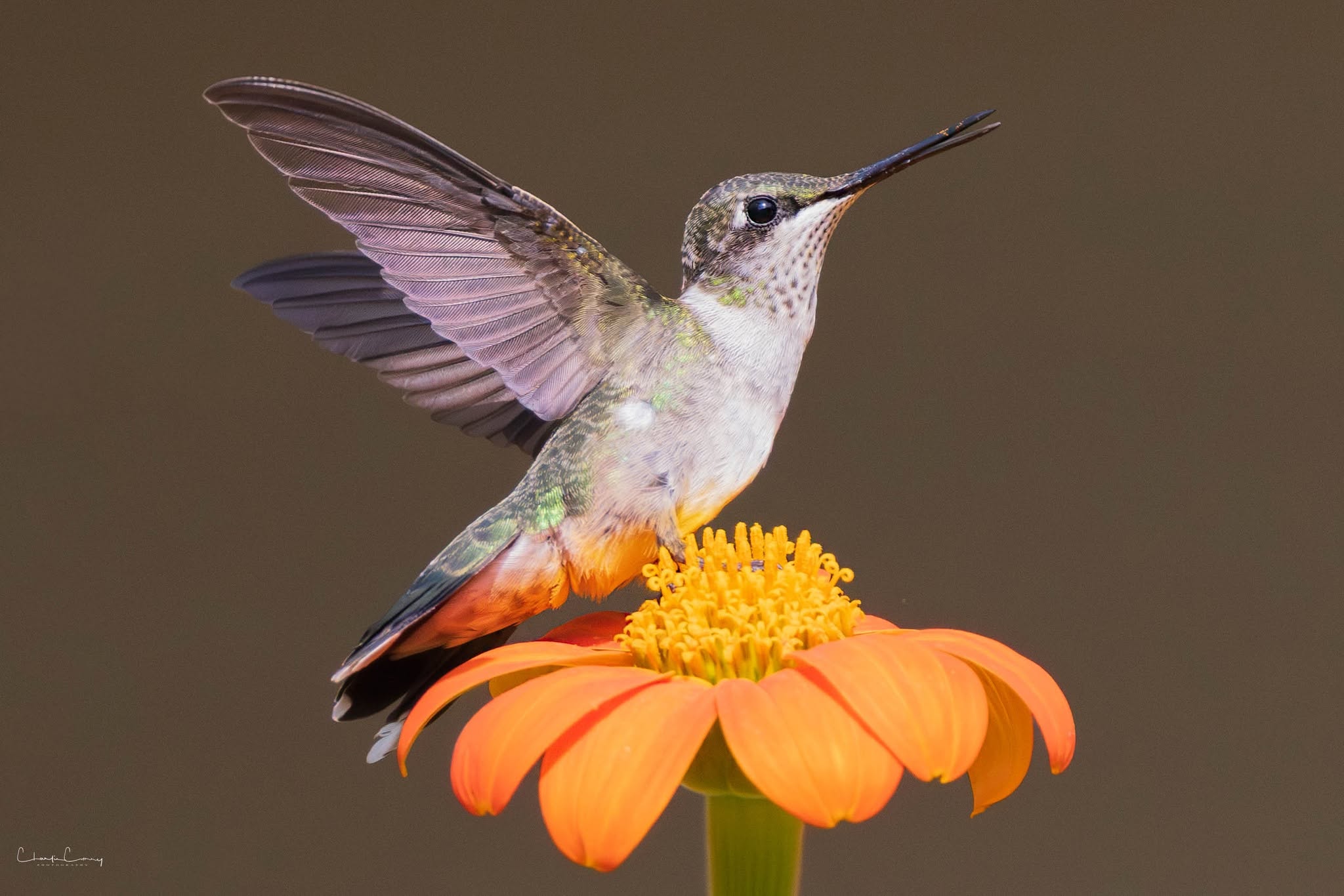
Photo by Charlie Curry
By Jenna Atma, Avian Biologist with Warner Parks BIRD Program
Have you been wondering when hummingbirds will finally show up in your yard this year? Plot twist—they’ve already been here for a while! Many of Tennessee’s Ruby-throated Hummingbirds arrive from their spring migration by mid to late April, with males typically showing up about a week before the females. The early arrival gives males time to establish and fiercely defend breeding territories before the nesting season begins.
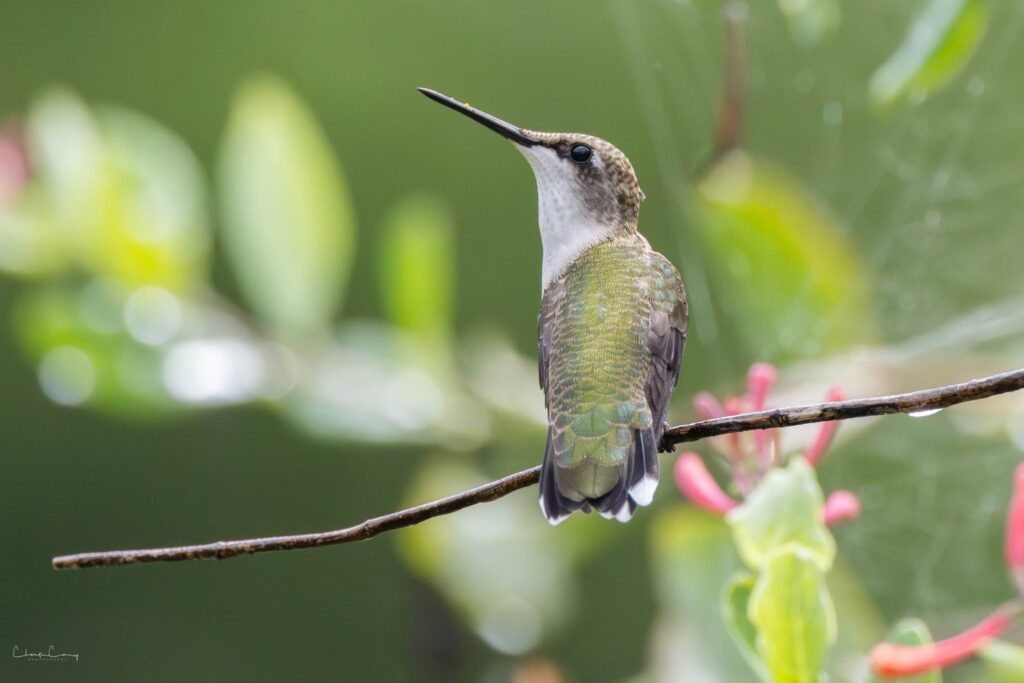
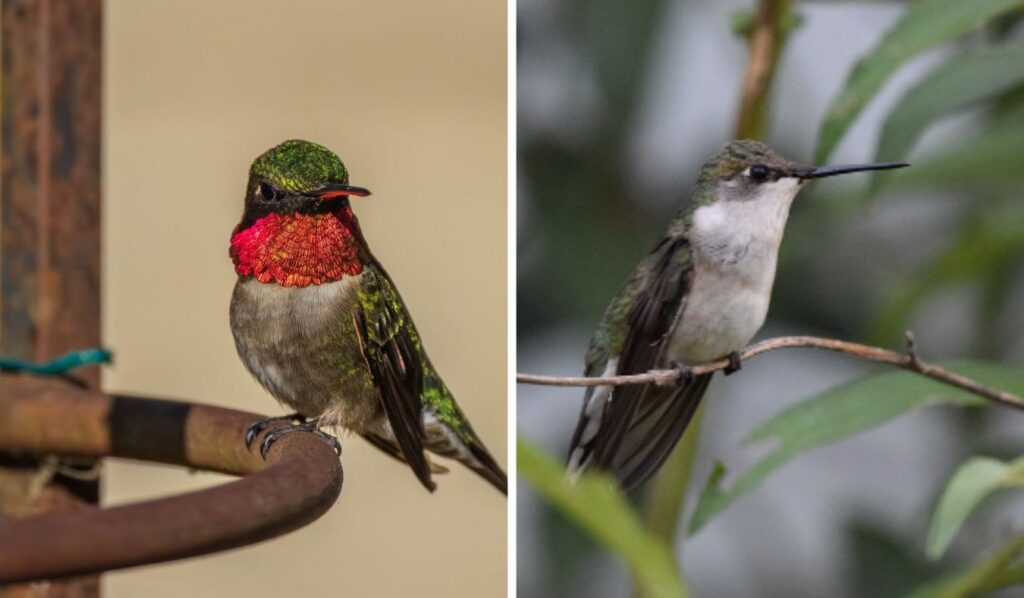
Once the females arrive, male Ruby-throated Hummingbirds try to dazzle her with their acrobatic flying and flashy red gorget feathers. The males swoop in a “dive display”; a steep U-shaped flight pattern, chittering as he does so to try to woo the female. If you’ve ever heard or seen a hummingbird quickly zooming up and down over and over–he’s probably trying to impress a female that’s hidden in the leaves! Once the male has won her over and the pair mates, the male then abandons her to raise the young all on her own throughout the rest of the summer.
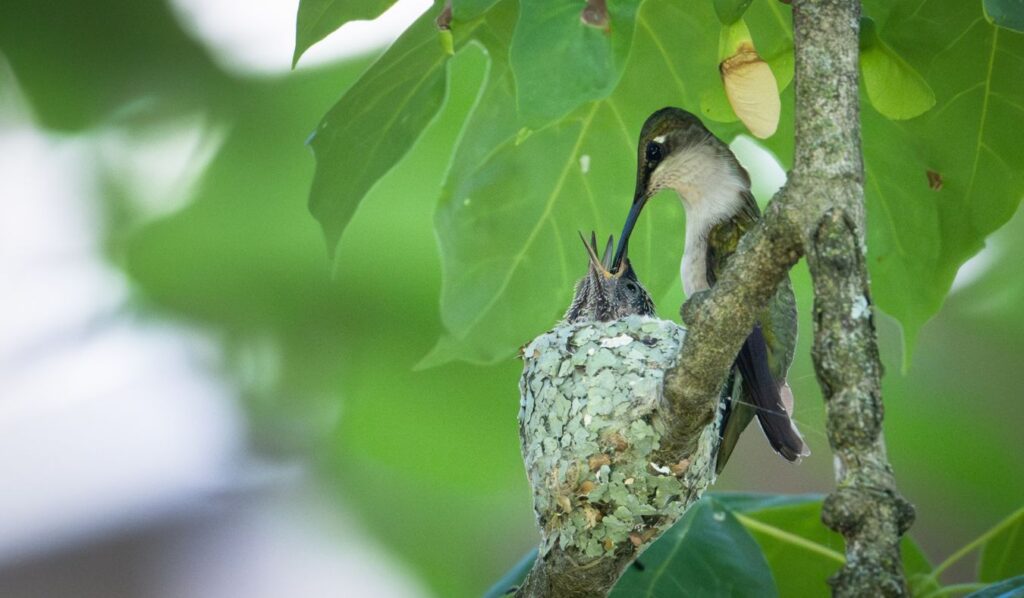
So if the hummingbirds have been here since April, then where have they been? Because the mother has to raise her babies to grow quickly, her young need to eat almost exclusively protein. For small birds like hummingbirds, protein sources are primarily bug-based! Starting on hatch day, a female hummingbird will spend the next 18-20 days feeding her nestlings small spiders and insects, spending almost all of her time searching for and catching buggy snacks rather than visiting sugar-water feeders for much of the spring and early summer.
Because hummingbirds (as well as many other bird species) need lots and lots of insects to raise their young, planting native plants in your area is incredibly important to help support your local hummingbirds. Invasive plants like Bradford Pears, Japanese Honeysuckle, and Privet only support a few (or even zero) species of insects, making them ecological deserts; in other words, they support very little life beyond themselves.
Alternatively, native plants, such as Tulip Poplars, Coral Honeysuckle, Bee Balm, and Jewelweed can help support a rich ecosystem of hundreds of insects, which make up a large amount of a hummingbird’s diet! Several of these native plants also supply hummingbirds with a natural nectaring source as well. Planting a garden to support insects through the spring and summer is a fantastic way to support hummingbirds!
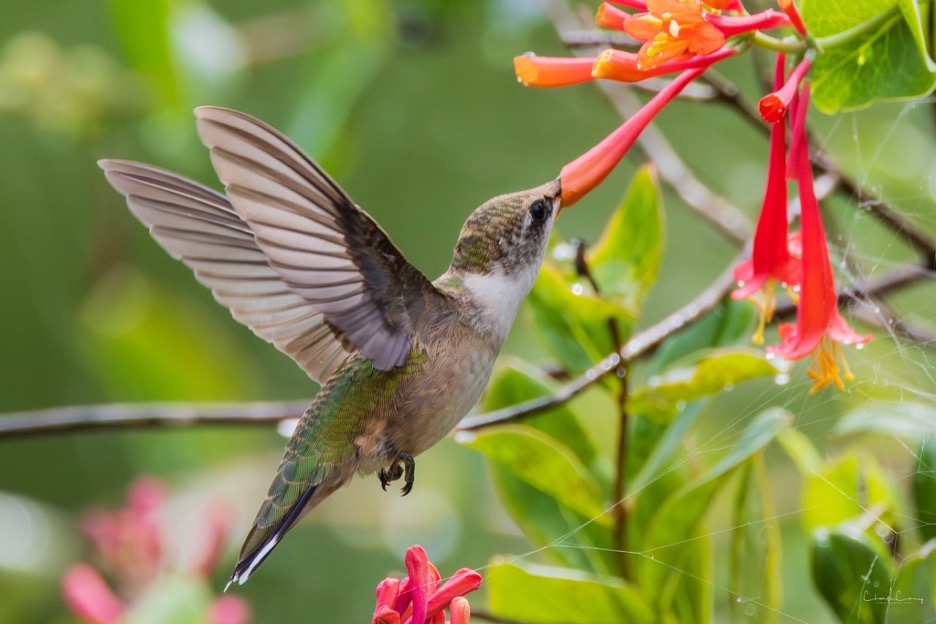
Once the young hummingbirds have fledged from the nest and the time to migrate is quickly approaching, both the fledglings and adults will begin packing on weight as much as possible to prepare for the long journey.
Starting in July through early October, hummingbirds begin to visit sugar-water feeders much more frequently as they switch their diet emphasis from protein to carbohydrates, building up incredible stores of fat to travel all the way from their summer grounds in North America to their wintering grounds of Central America.
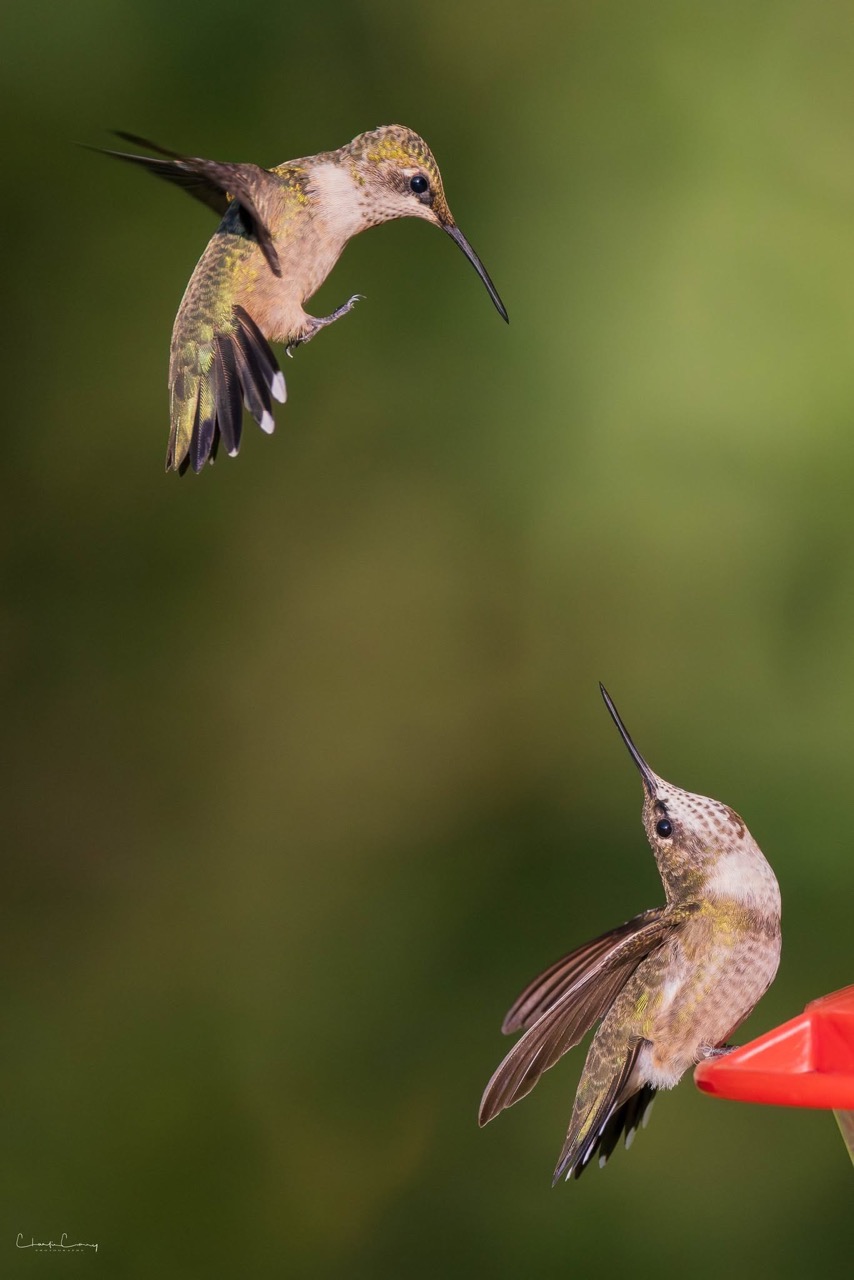
August and September are peak times to put out extra hummingbird feeders to help these tiny birds bulk up for their migratory journey, which can range from 500-2,500 miles one way! Hummingbirds can double their bodyweight in the months leading up to migration, which is an incredible feat for such tiny birds.
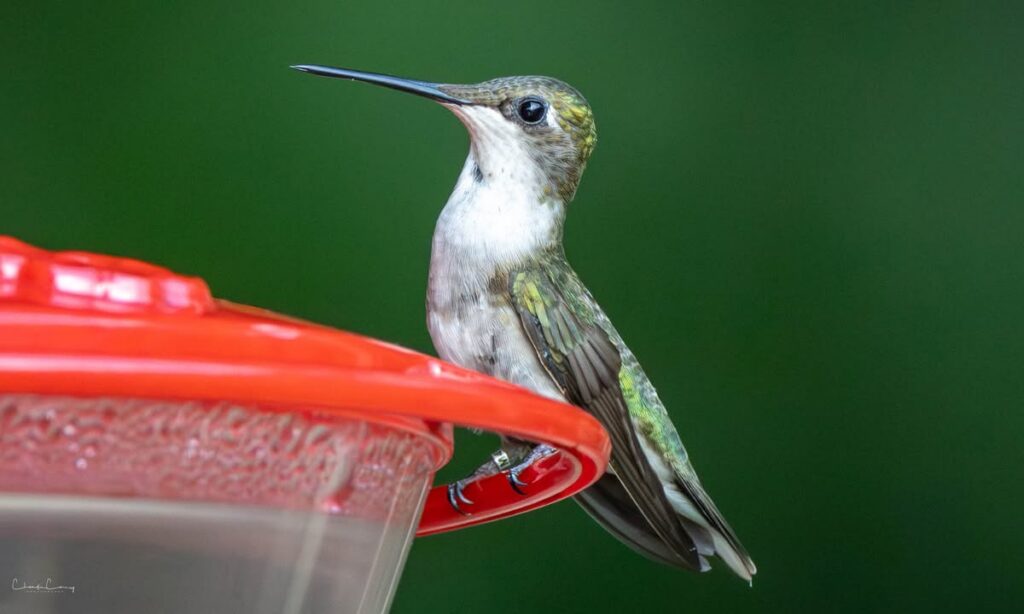
If you decide to supply hummingbirds with supplemental food as they prepare for their big fall migration, make sure you’re providing them with the best possible food choice! When preparing food for a hummingbird feeder, ensure that you’re only using white granulated sugar dissolved in water (1:4) without any dyes or additives, which can actually be detrimental to a hummingbirds’ health during a time where proper nutrition is crucial. The heat from the summer can also spoil sugar-water quickly, so make sure you clean your feeders and replace the nectar every other day to prevent mold growth!
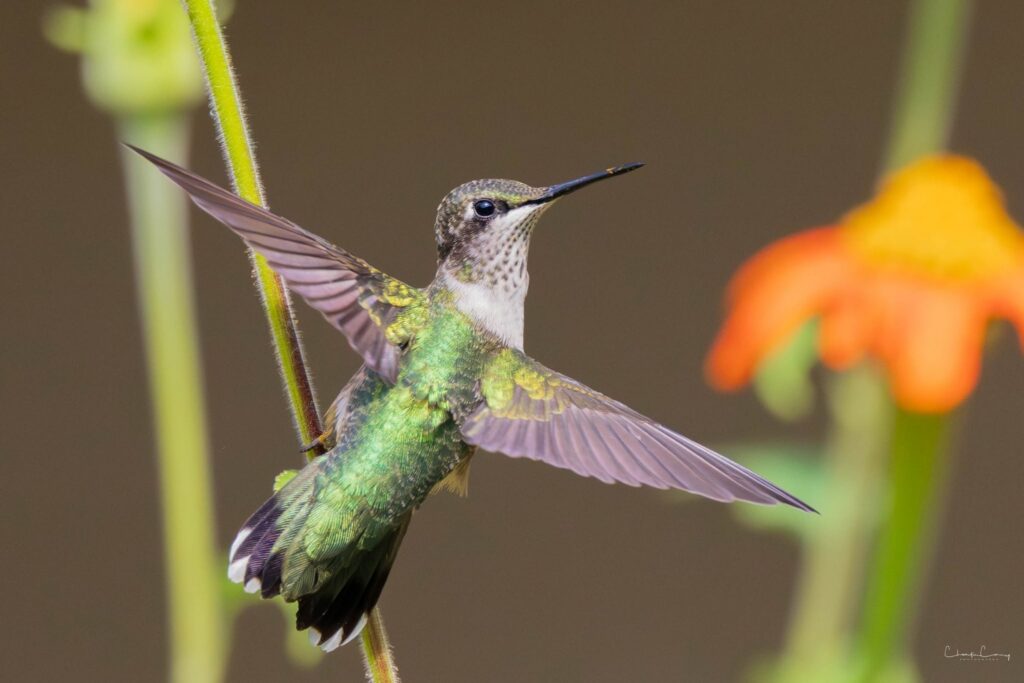
With the summer season moving quickly towards fall, our local hummingbirds are gearing up for an incredibly taxing chapter of their annual lifecycle. After nesting, feeding their young, and teaching their fledglings to be independent, their priority has now shifted entirely to bulking up for the long journey south. Each visit to a flower or feeder and every buggy protein snack is vital for building the fat stores necessary to sustain a flight spanning hundreds or even thousands of miles. You can help your local hummingbirds prepare by planting hummingbird-friendly plants or by keeping a clean and reliable feeder source for them throughout the summer as they prepare to make their big migratory trip this fall!
Interested in seeing hummingbird research up close? You can observe alongside the Warner Park’s BIRD Program at the first Hummingbird Migration Banding Session of the season on August 5!