
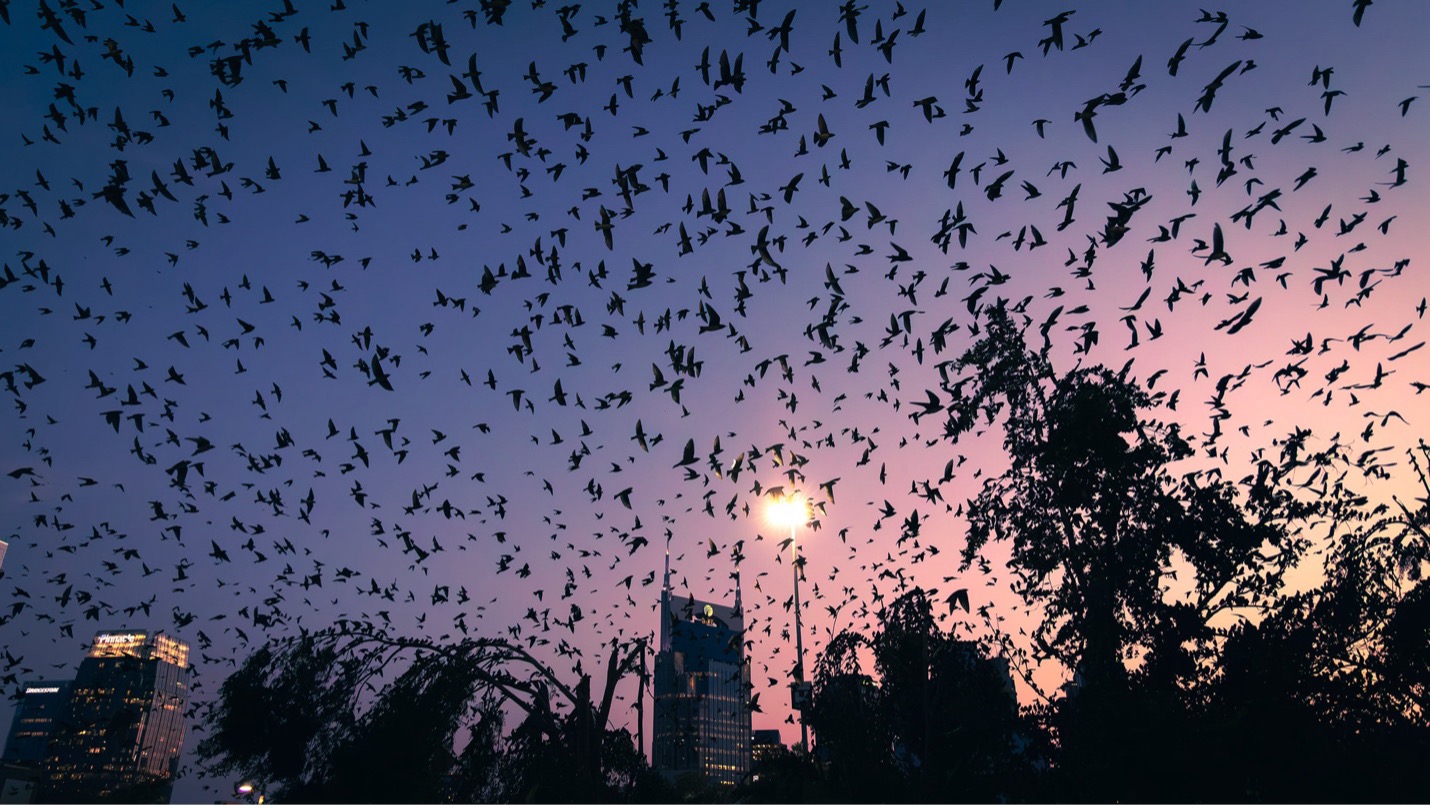
Purple Martins in Downtown Nashville. Photo by Terry Cook.
By Jenna Atma, Avian Biologist
Warner Parks B.I.R.D. Program
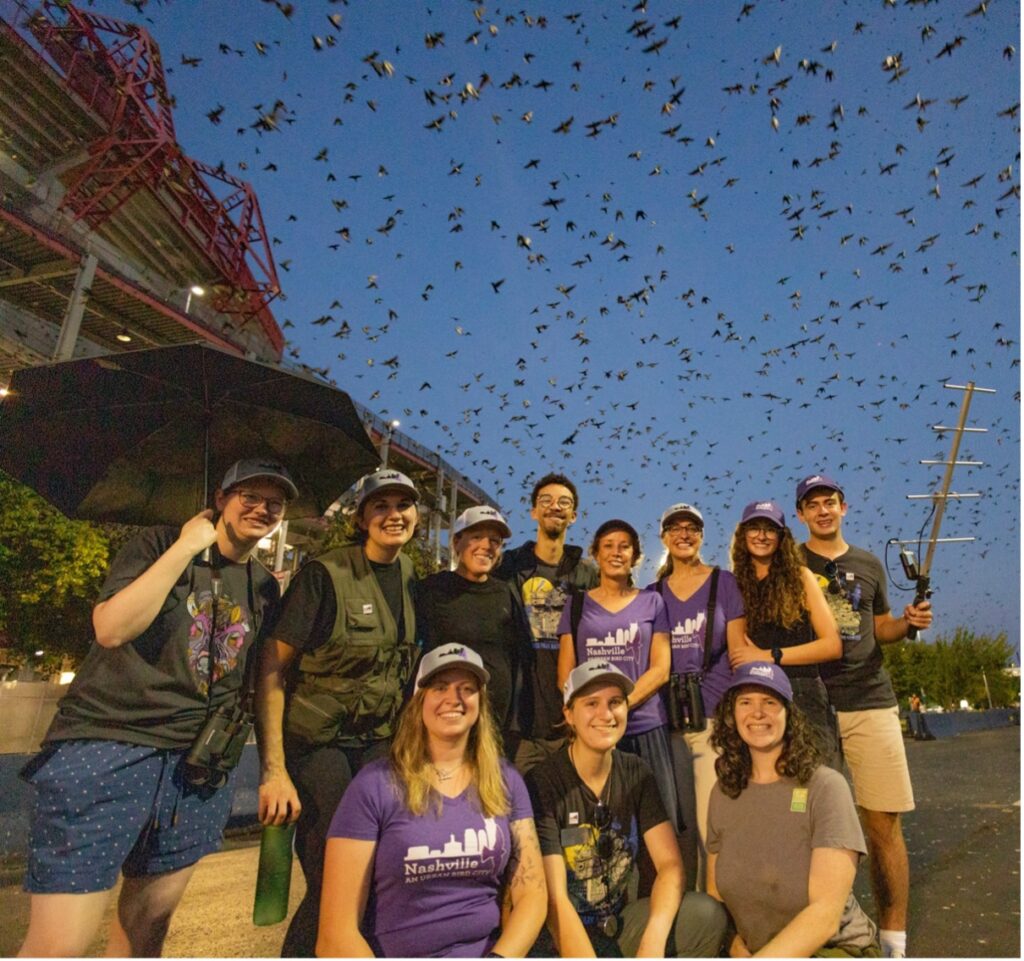
Every summer, downtown Nashville becomes the stage for one of nature’s most spectacular performances. Beginning in late June and lasting through mid-August, more than 150,000 Purple Martins fill the evening sky, soaring and swooping in a dizzying display of aerial acrobatics. The birds snatch flies and other insects from the air before descending in waves onto just a handful of trees, forming what is known as a “pre-migration roost.” These amazing birds are friendly evening visitors to downtown, and compared to most wild animals, don’t seem to mind humans much at all. In fact, they seem to be particularly drawn to densely populated areas!
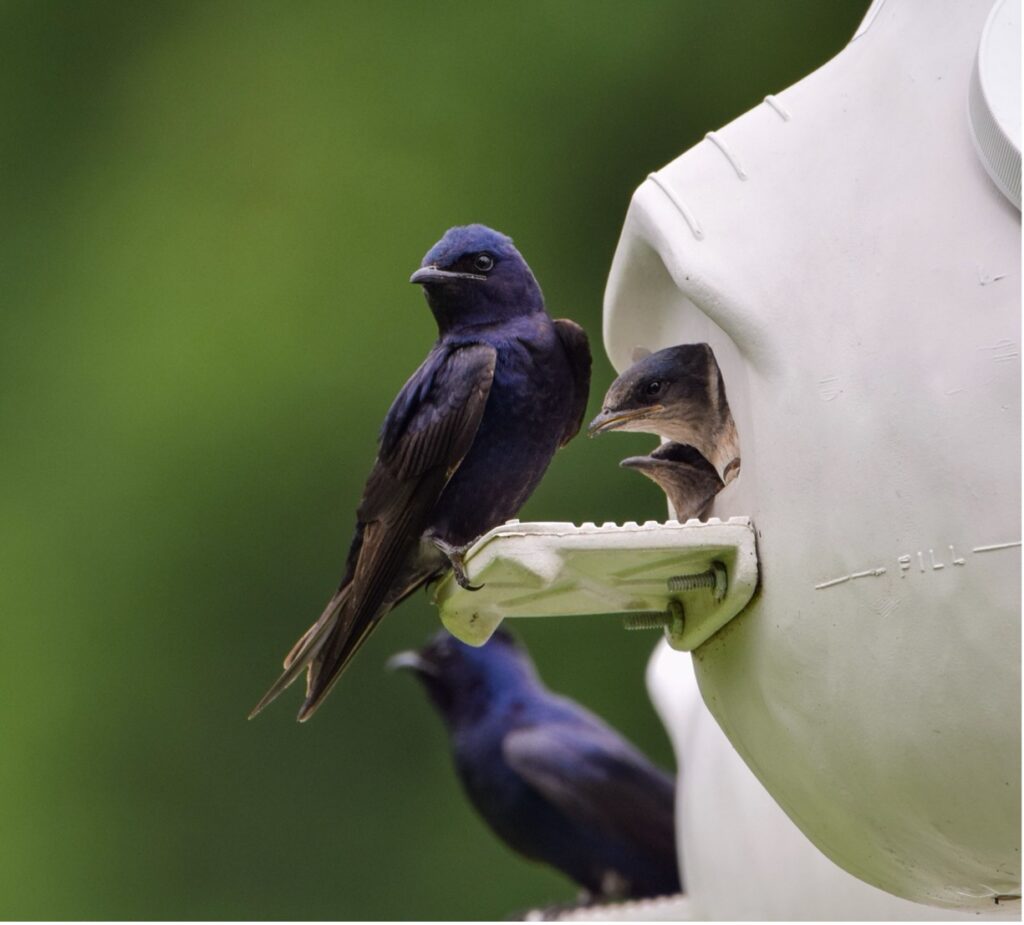
The Purple Martins that gather downtown each summer aren’t just local birds, they’re international travelers! Purple Martins are the largest species of swallow in North America, and they breed all throughout the eastern US (and a few locations in the west). They are also one of the few birds that depends almost exclusively on humans for artificial nest sites, often colony houses or gourd systems. These birds then travel over 10,000 miles each year during migration to spend the winter deep in South America! To prepare for this daunting task, many young Purple Martins will gather in massive groups, including the roost in Nashville.

Seemingly drawn to the brilliant lights, the downtown roost is often comprised of many hatch-year birds who may have just recently learned to fly and forage on their own. While we don’t yet know exactly why they choose such a populated area to gather, there’s a good chance it’s because it resembles an “island” of sorts; in less populated areas, Purple Martins often form roosts in tree stands surrounded by water, such as on actual islands or coastal peninsulas. But locations like that are less common in the Southeastern US, and a small stand of trees near a parking lot may be similar enough for them! The nearby human activity may also help deter potential predators, which helps create a relatively safe roosting spot for these social birds.
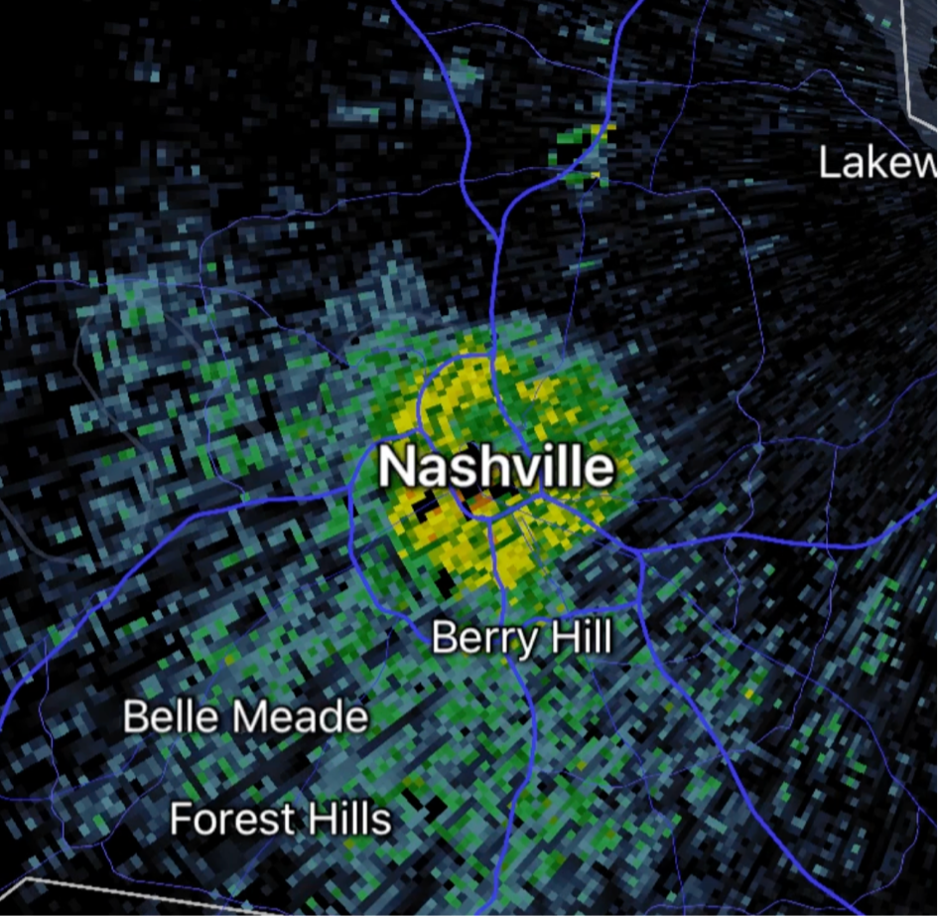
Purple Martins have been summer visitors to Nashville for a long time. They have likely been using trees near the Cumberland River for decades, but we know they have for sure at least since 1997, thanks to NEXRAD radar. Since so many birds amass in one location so densely, when they take off in the morning, the weather radar can actually see a “ring” of birds dispersing from downtown Nashville! This distinctive radar signature has allowed us to track the roost’s presence and duration over the years, and helps confirm that Purple Martins have likely been gathering in the Nashville area for a long time.
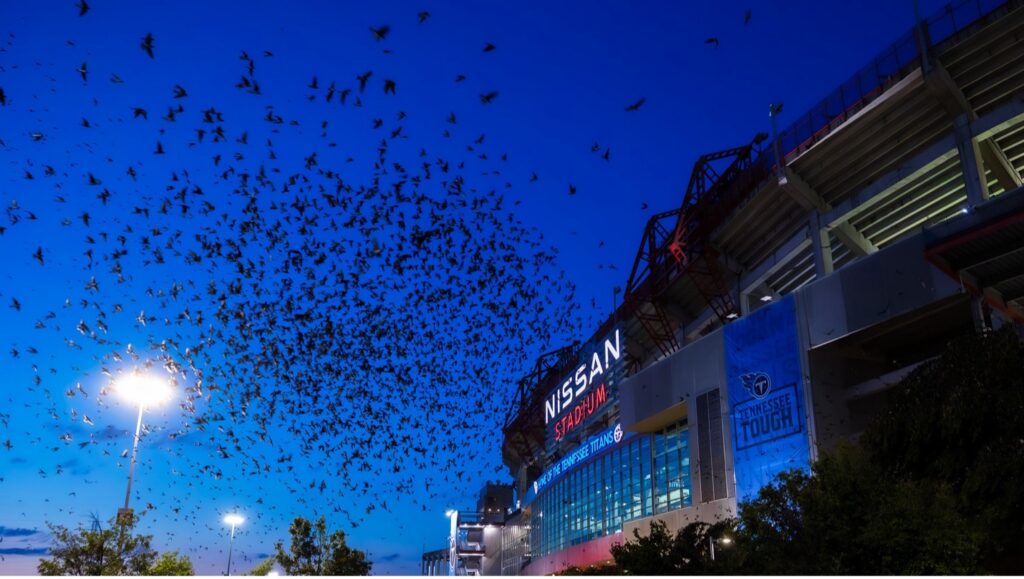
Although the Purple Martins call downtown Nashville their summer home, where exactly they choose to roost tends to vary year-to-year. In 2025, they moved around to a few different locations, finally choosing a stand of roughly 10 trees near Music City Center in late July. The year before, they chose a stand of elm trees next to the Titan’s Stadium. In ’22 and ’23, they roosted in the trees that once stood outside of the Schermerhorn Symphony Center. It’ll be interesting to see where they decide to roost downtown this summer! Will they return to a previously-established location? Or will they discover yet another new spot for 2026?
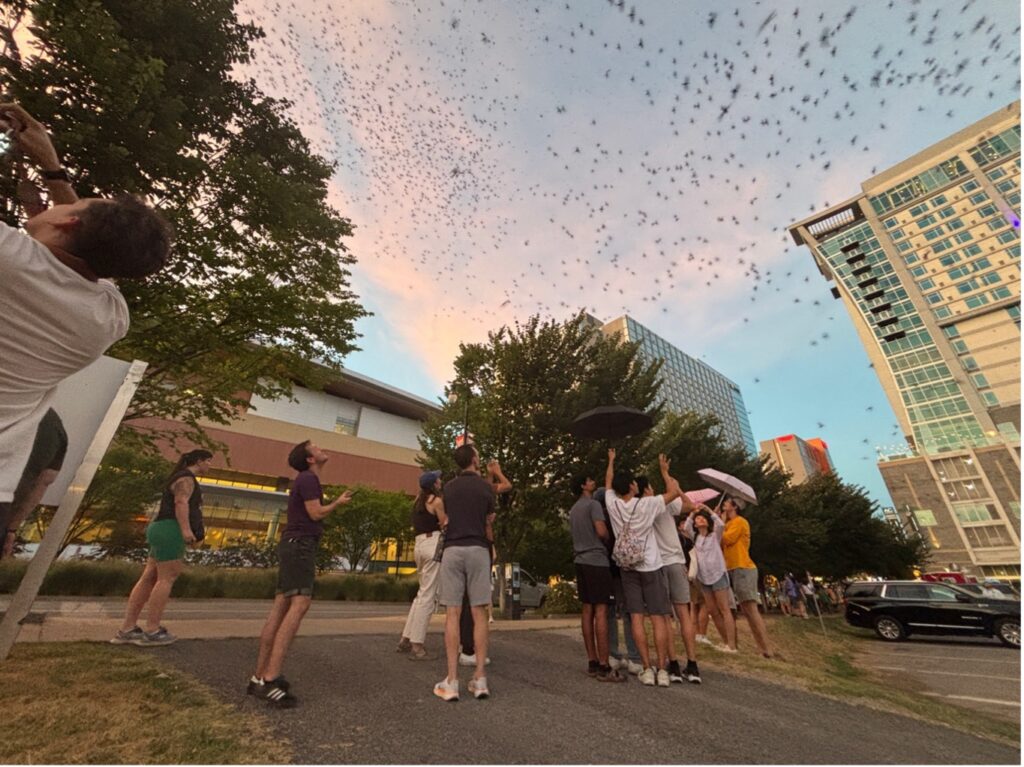
No matter where they roost downtown, Purple Martins know how to draw a crowd. Hundreds of people have gathered downtown to admire their graceful flight, and for the past few years we have organized “Purple Martin Watch Parties” for people to enjoy the show and learn more about these amazing birds alongside Naturalist interpreters. No matter what, these birds never fail to dazzle the visitors, photographers, reporters, and everyone else who comes out to see them.
We need your help finding this year’s Purple Martin roost! In an urban setting like Nashville, there are very few species of birds that could be confused with Purple Martins. However, the European Starling is the main look-alike urban bird, so look closely to spot the differences between the two!
Purple Martins have wedge-shaped tails in flight, long wings, and tend to sit with an upright posture. The males are a solid, iridescent dark purple, and the females and juveniles are dark on top and pale below.
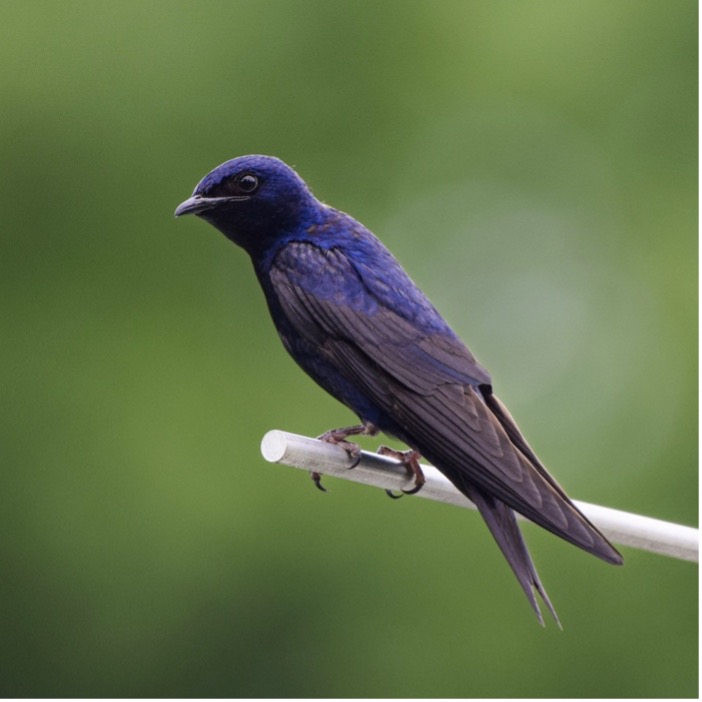
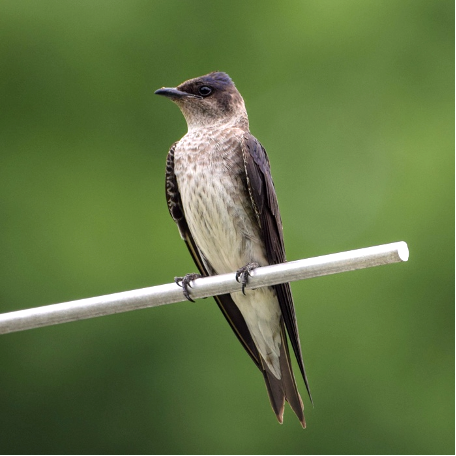
Purple Martins (Male and Female)
Starlings on the other hand are iridescent (sometimes speckled) black, and have short tails, long pink legs, and a long and pointed yellow beak (except for the juveniles, which have dusty brown feathers and a dark colored beak). Both species fly and roost in large groups, so pay attention to these small details when looking for Nashville’s downtown martins.
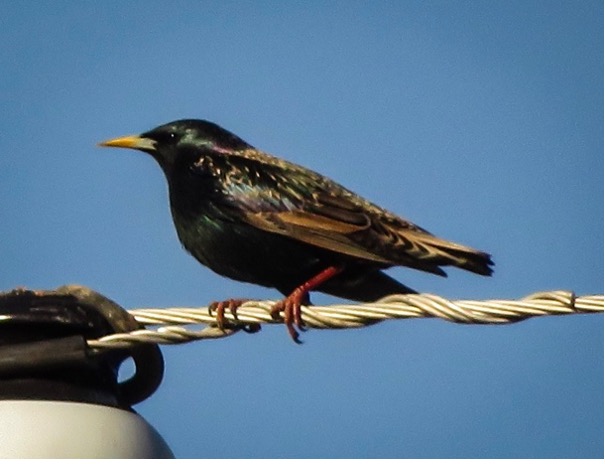
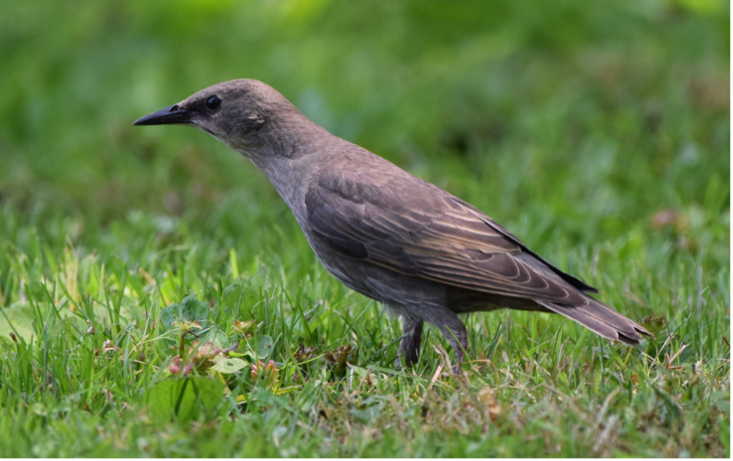
European Starlings (Adult and Juvenile)
If you see a large group of Purple Martins roosting in downtown Nashville, help us find them by reporting your sighting on our Survey 123 link at this QR code: