
By Jenna Atma, Avian Biologist
Warner Parks B.I.R.D. Program
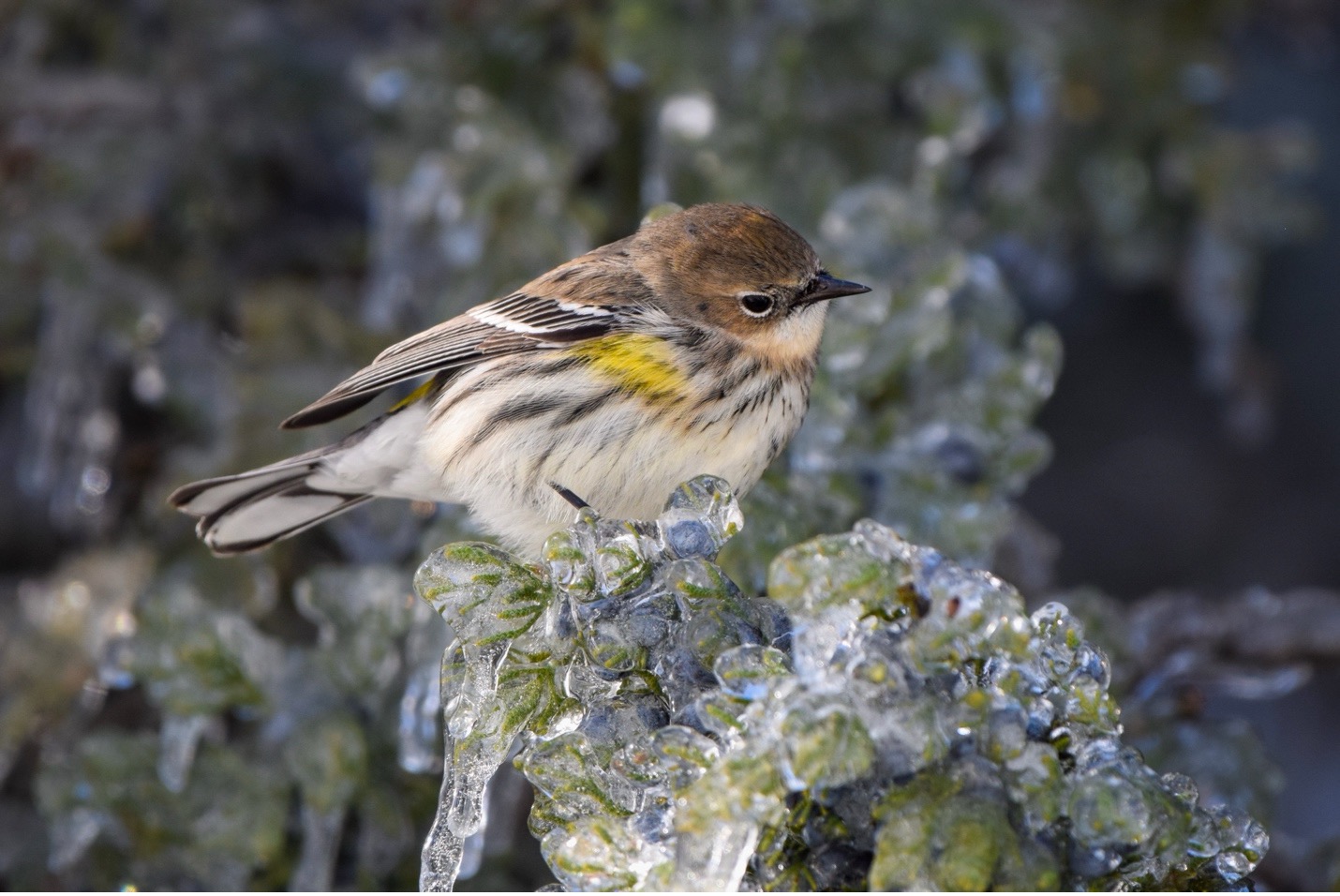
Cover photo: Myrtle Warbler among Cedar berries. All photos by Jenna Atma.
When everything froze over during Winter Storm Fern, everyone I knew was taking shelter and bundling up as much as possible to stay warm and wait out the cold. I myself was busy gathering every warm blanket and jacket that I owned, ready to stay as snug as possible in my living room as the snow was quickly falling. As an avid birdwatcher, I also made sure to fill up my feeder station with fresh suet and birdseed, with a pair of binoculars propped up by the window for easy access.
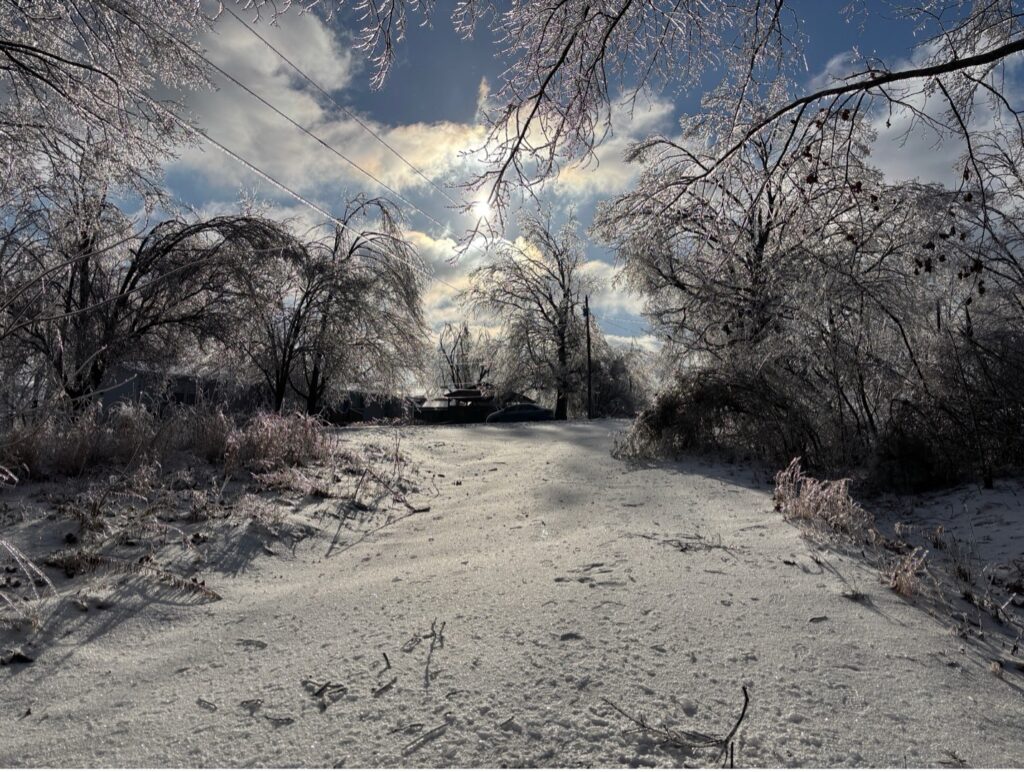
I lost power at my house for several days during the ice storm, so without the TV or internet to occupy myself, I did more winter-weather birdwatching than I usually do. In-between spending time warming up in my car and huddled under blankets in my house, I went for walks up and down my street and tended to my very active bird feeder station. With all my birdwatching, I even added some new species to my “yard list” (for a total of 97 now)!
In the winter, a bird’s primary goal is to stay warm, which they do by finding shelter and food. During extreme cold weather events, like we just experienced throughout Tennessee during the past couple of weeks, heavy snowfall and ice can cover up usual feeding spots in nearby fields and forests, pushing more birds to flock to birdfeeders in search of an accessible meal. If you had your own birdfeeders out during the “Icemageddon”, you may have even noticed some more unusual visitors mixed into these flocks—species that often only visit feeders in only the coldest (or iciest) circumstances!
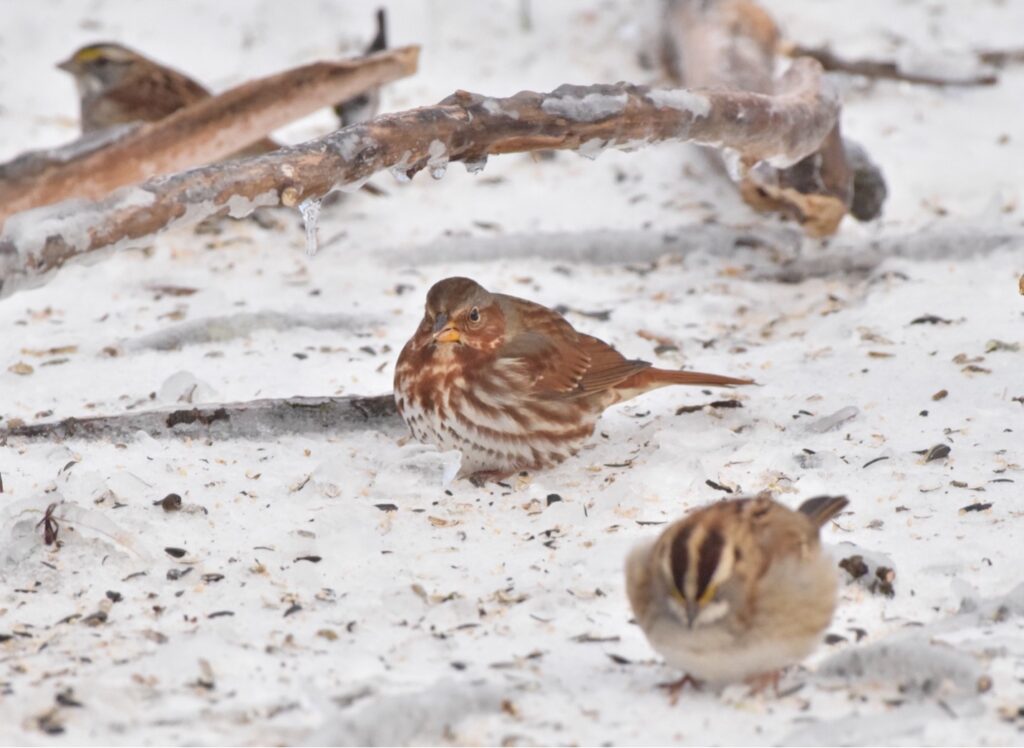
One of these more unique winter visitors is the Fox Sparrow; often only being drawn to feeders after heavy snows or ice-overs. These boldly-colored sparrows are often found alone or in very small groups, and are also typically mixed in with other species of sparrows (such as the White-throated Sparrows in the photo above), scratching leaves aside in or around brushy plants in search of seeds and berries. I had 3 of them in my yard at one point, which was a very special treat, as I had only ever seen one once before in my life!
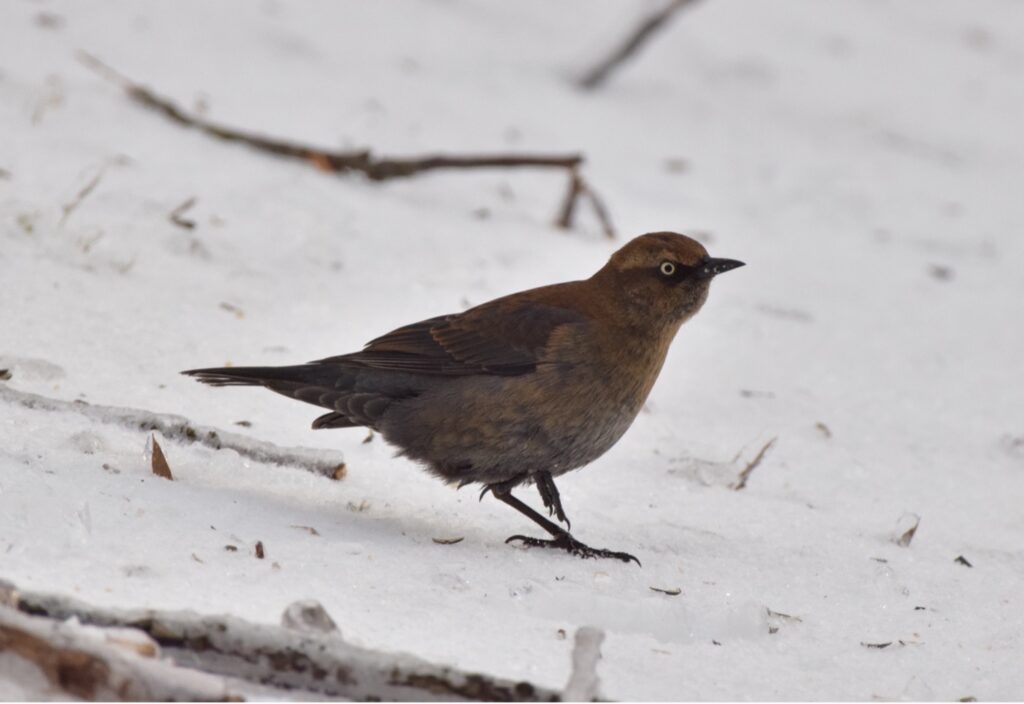
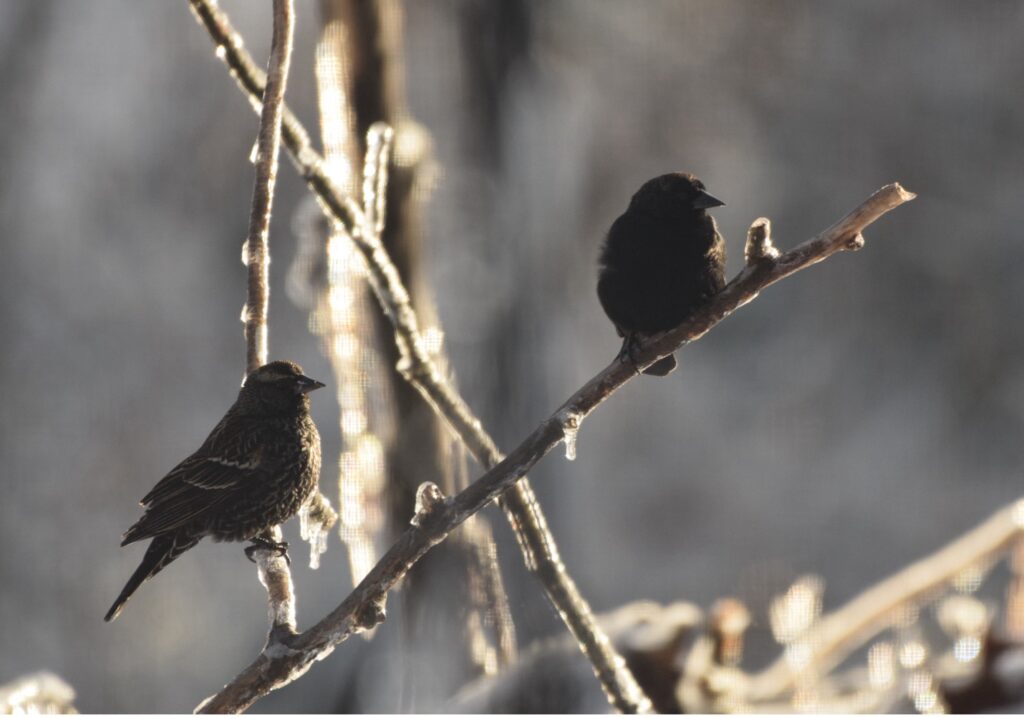
Some of my other more uncommon winter visitors during the ice storm were a handful of Rusty Blackbirds (pictured above); one of North America’s most rapidly declining species (and one of my personal favorite species!), several Purple Finches; which seem to be quite numerous this year, a Yellow-bellied Sapsucker; making its cat-like “mew” calls, a couple of Northern Flickers; flashing their yellow underwing feathers as they flew to high trees, and an entire army of Grackles and Red-winged Blackbirds, which descended upon my feeders rather raucously!
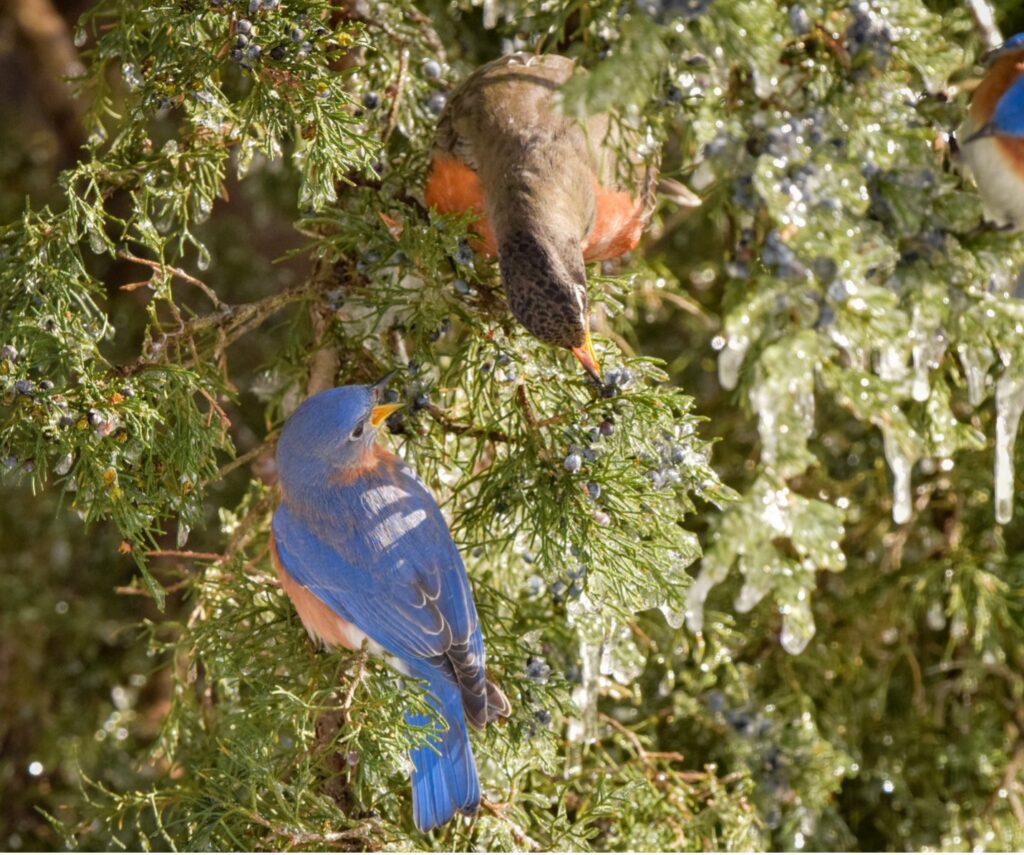
In addition to watching my feeder station, I also spent a few mornings walking up and down my frozen street to see how other birds were faring. I found it fascinating to watch the different behaviors of birds as they all dealt with the ice-over and freezing temperatures in their own ways: Bluebirds, Robins, Hermit Thrushes, Cedar Waxwings, Myrtle Warblers, and Northern Mockingbirds, species that all specialize more in berries and insects rather than seeds, had all converged on the few Cedar trees that had berries on them in the neighborhood, packed densely among the overhanging branches as they plucked out fruit that had evaded being covered in ice.
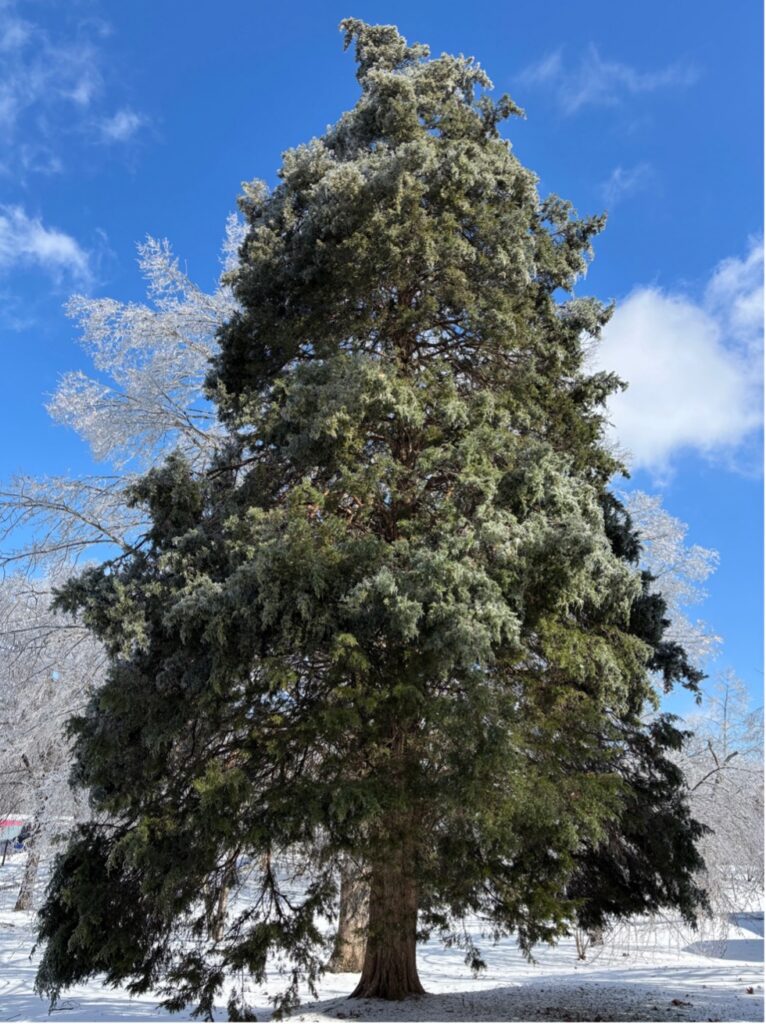
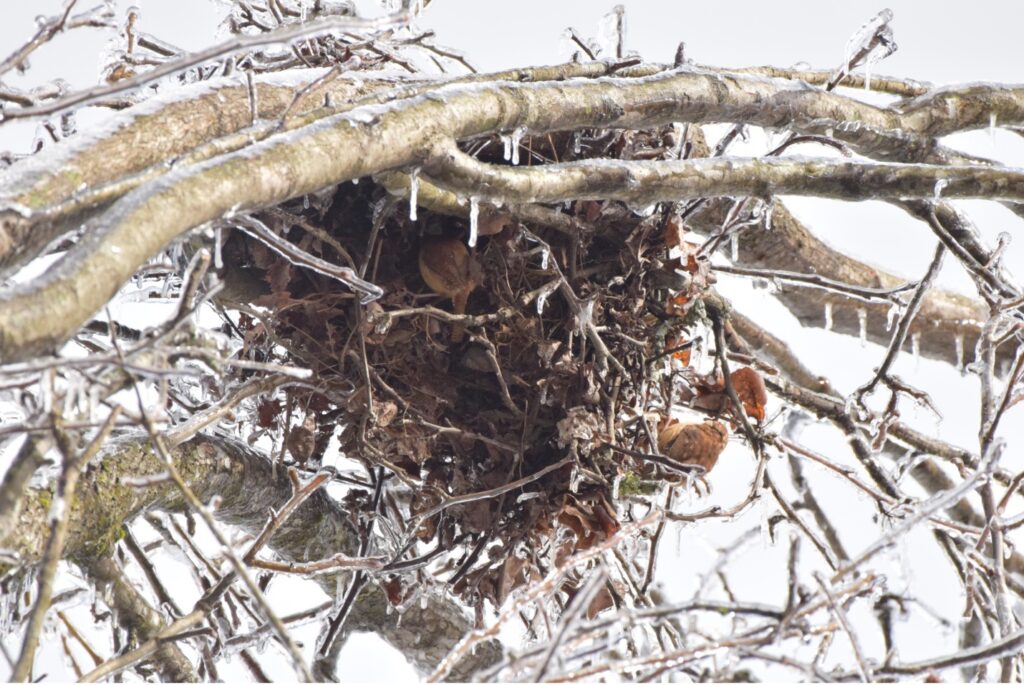

Shelter is also important during freezing temperatures for birds. Eastern Bluebirds, for example, will often use tree cavities or man-made nestboxes, with multiple birds huddling together inside for shared warmth. I checked inside the bluebird box in my yard after a few days, and although I didn’t see any birds in there when I checked, I could see signs that it had been occupied recently. Evergreens, like native Eastern Red Cedars and American/Winterberry Hollies, are also important providers of shelter, protecting birds from wind, ice, and predators.
This ice storm certainly wreaked havoc to both humans and nature alike in many ways. But seeing how resourceful my neighborhood birds were when everything was buried in layers of ice, as well as seeing our local community come together to lend each other a helping hand—it only reminds me of how resilient we all can be.