
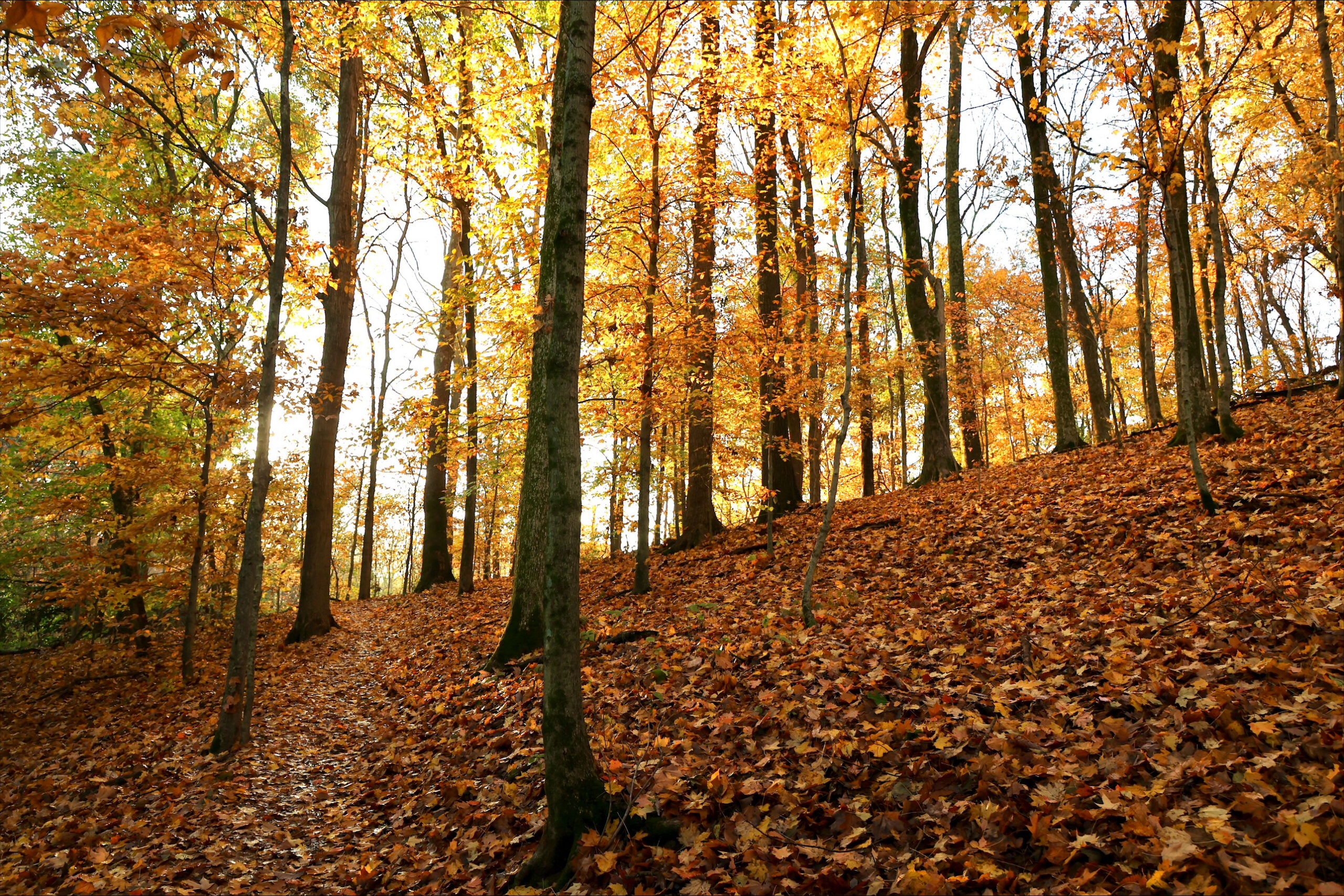
Nashville’s parks are places to play, explore, gather and connect with nature. Across Davidson County, they encompass ball fields and playgrounds, golf courses and greenways , as well as forests, streams, meadows and wetlands that provide habitat for wildlife and give people a chance to experience the natural world close to home.
Not every park is the same. And not every park should be managed the same way.
For decades, Nashville’s conservation community has advocated for greater recognition and protection of the natural areas within our park system. On October 6, this vision became a reality.
The Metro Parks Board officially approved the designation of 14 natural areas across Davidson County, encompassing more than 8,500 acres—approximately 54% of Nashville’s entire Metro Parks system.
The landmark decision follows the Board’s adoption of a new Designated Natural Area (DNA) Policy in August, which established a formal framework for recognizing and managing areas within the Metro Parks system that have exceptional and irreplaceable ecological or scenic value. The policy establishes criteria for designation, management and use standards, and a process for developing site-specific management plans.
Together, these actions represent a significant milestone in the protection and stewardship of Nashville’s natural landscapes.
A golf course serves a different purpose than a forest. A ball field serves a different purpose than a wetland. A playground is designed for active recreation, while a stream corridor can provide critical habitat, protect water quality and give wildlife room to move through a growing city.
Nashville needs all these places.
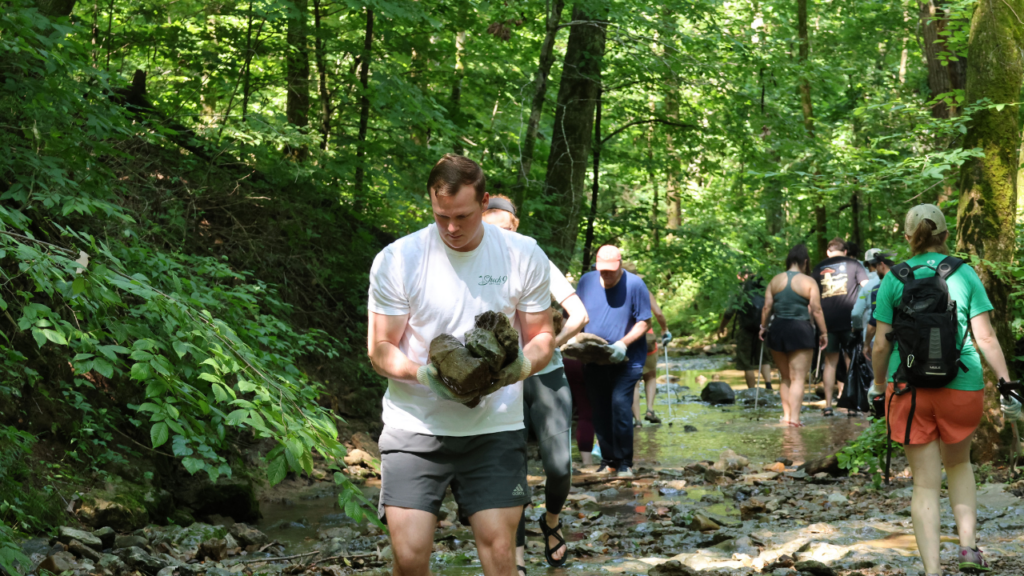
But our natural areas need a management approach that recognizes what makes them unique and protects the ecological value that makes them worth preserving.
“Just as golf courses, athletic fields, and swimming pools require specialized management, maintenance, and best practices, so do natural areas,” Friends of Warner Parks Resource Management and Historian Bob Parrish said. “The adoption of the DNA Policy will ensure that park visitors will have the highest quality of opportunities for passive outdoor recreation, environmental education, and nature enjoyment right here in our local parks system.”
A Long Time Coming
The idea behind the new policy is not new. Nashville’s 2017 Plan to Play recognized that natural areas require unique considerations within the broader park system. The 2026 update builds on that vision, recognizing the importance of protecting natural landscapes as Nashville continues to grow.
With the adoption of the DNA Policy in August and the first official designations in October, that long-standing vision has become a formal commitment to conservation.
Importantly, designation does not mean closing these places to the public. A designated natural area can encompass a portion of a larger park, allowing active recreation and conservation-focused management to coexist. Activities such as hiking, running, wildlife observation, and environmental education remain important ways for people to experience these landscapes, consistent with the policy and each area’s management plan.
What This Means for Warner Parks
For Friends of Warner Parks, this milestone represents a meaningful step forward in protecting the landscapes that make Percy and Edwin Warner Parks so special.
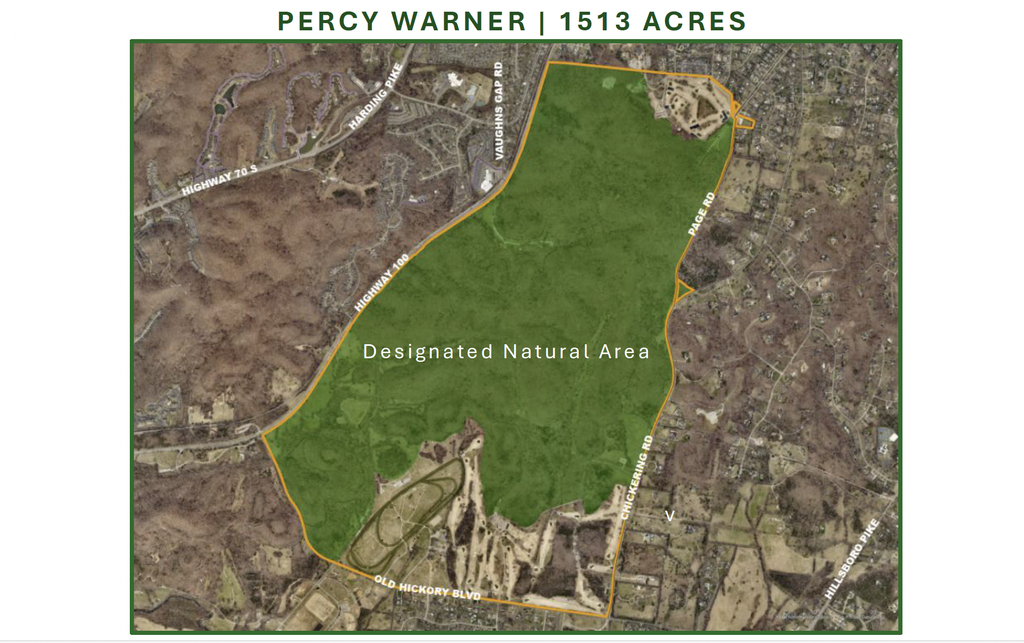
Of the approximately 8,558 acres designated across Nashville, 2,560 acres are within Warner Parks, encompassing nearly 80% of the Parks’ total landscape.
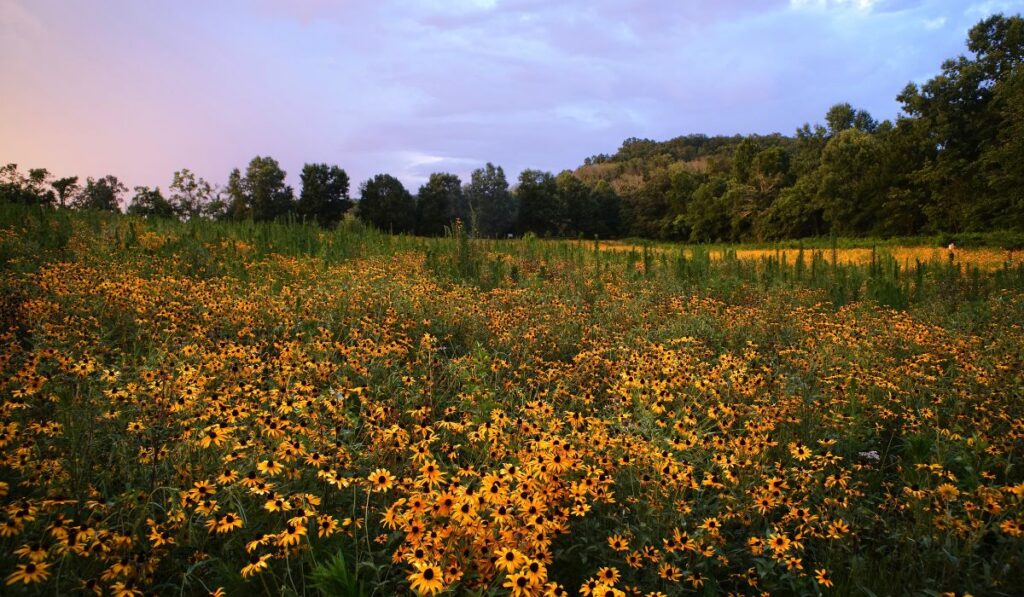
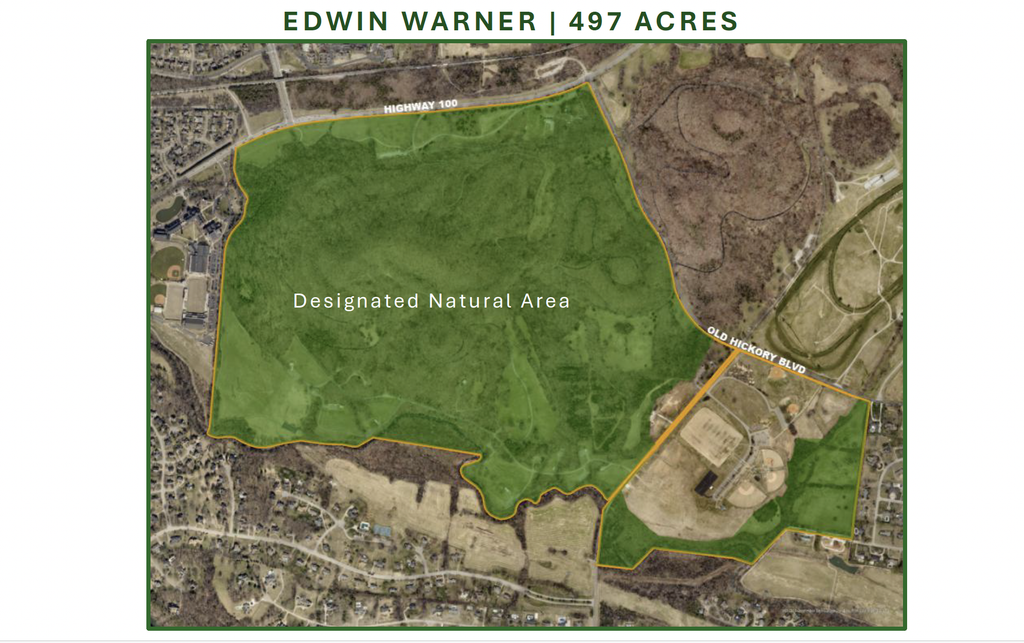
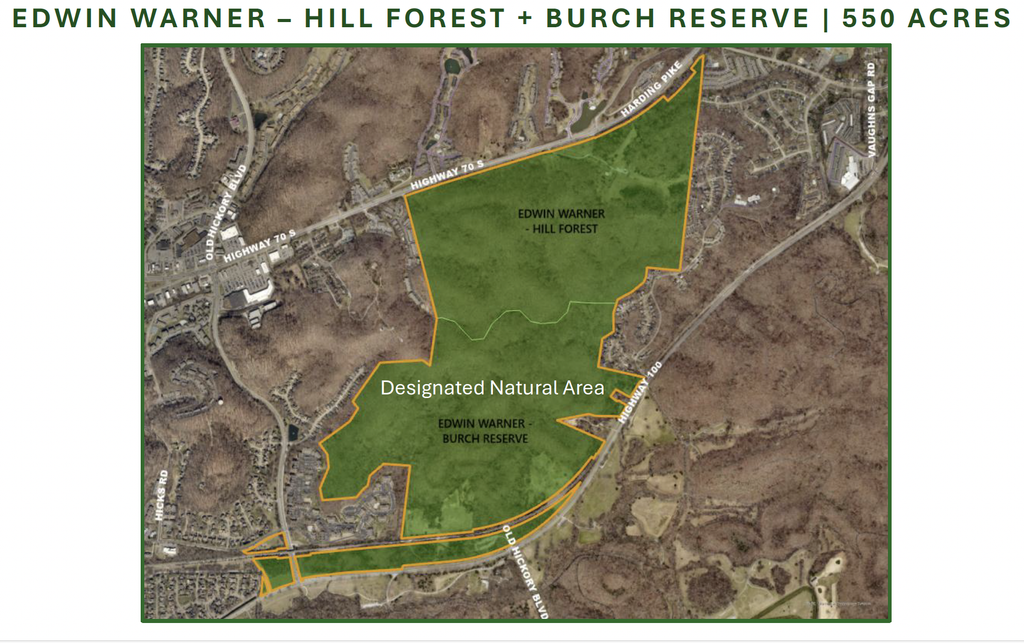
Three distinct areas received designation: 1,513 acres in Percy Warner Park, 497 acres in Edwin Warner Park, and 550 acres encompassing Hill Forest and Burch Reserve. These landscapes contain some of Nashville’s most ecologically significant natural resources, from mature hardwood forests and native meadows to freshwater streams, springs, caves and wildlife habitat.
Hill Forest and Burch Reserve received Level 1 designation, recognizing an extraordinary landscape that includes old-growth forest, rare habitats and approximately 225 acres already protected as a Tennessee State Natural Area. The designated areas in Percy and Edwin Warner Parks received Level 2 designation.
Together, these connected landscapes support an exceptional diversity of native plants and wildlife, while providing the natural setting for generations of Nashvillians to hike, explore, observe wildlife and experience the outdoors.
That combination makes thoughtful stewardship especially important.
Designation also creates a formal layer of accountability. The policy establishes a long-term commitment to protecting these landscapes, with the goal of preserving their natural value for generations to come. Any proposal to change a designated area’s boundaries or remove its designation must be formally presented to and approved by the Metro Parks Board.
“It is a commitment to future generations,” Friends of Warner Parks Ecologist Terry Cook said. “Nashville’s earlier leaders intentionally conserved these large landscapes. This policy continues that legacy by ensuring that future residents inherit functioning natural systems—not simply undeveloped acreage.”
And Warner Parks are not alone.
The first group of designated natural areas includes landscapes across Davidson County, from the forests and ridges of Beaman Park to the wetlands of Shelby Bottoms, the grasslands of Bells Bend and the diverse habitats of Mill Ridge and Peeler Parks.
Each of these places contributes something unique to Nashville’s natural heritage. Together, they protect thousands of acres of forests, meadows, streams and wetlands that support biodiversity, improve water quality and provide opportunities for residents to experience nature close to home.
Their designation reflects a citywide commitment to recognizing and protecting these irreplaceable natural resources for generations to come.
These places are not empty space waiting for the next park improvement. They are valuable natural resources in their own right, worthy of intentional care and protection.
Looking Forward
After decades of advocacy, Nashville has taken a meaningful step toward protecting what makes its natural areas so extraordinary.
For Friends of Warner Parks, this designation reinforces a commitment that has guided our work for nearly four decades: caring for these landscapes so that they remain healthy, vibrant and accessible for generations to come.